Category: Evolve

  • How Appliance Protection Plugs Save You Money on Repairs Long-Term

    How Appliance Protection Plugs Save You Money on Repairs Long-Term

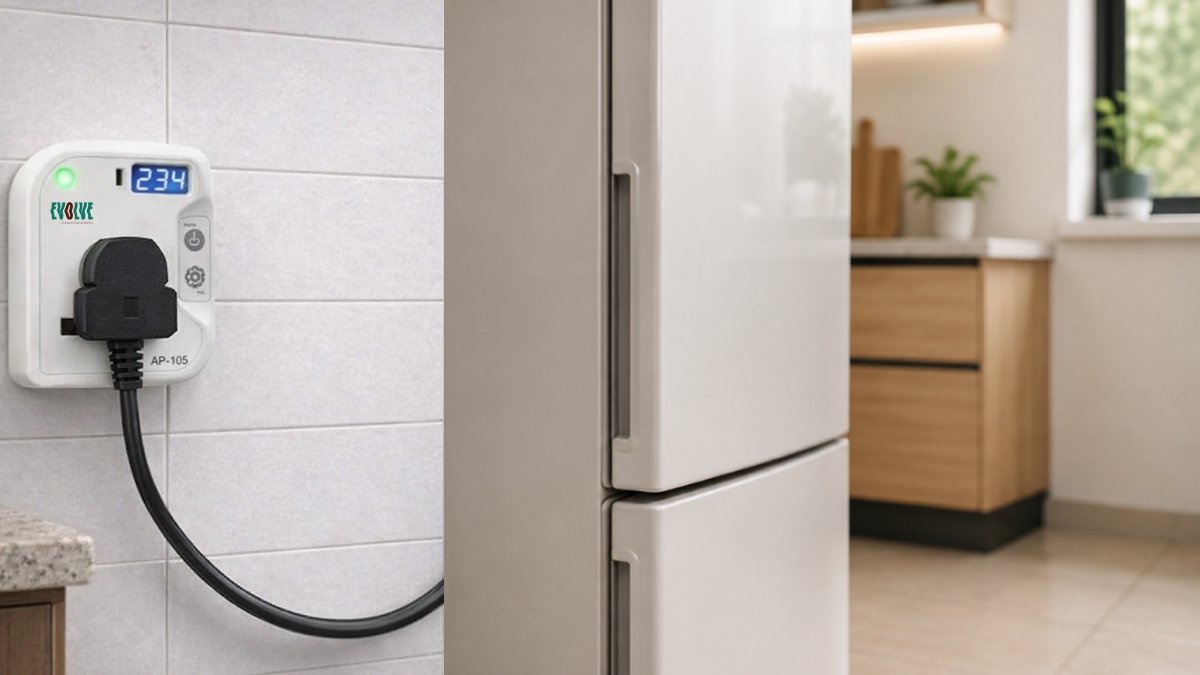
    If you’ve ever had a refrigerator die two years into a seven-year warranty, or watched your washing machine’s control board fry after a random power flicker, you already know how expensive “small” electrical problems can get. What most homeowners don’t realize is that a huge percentage of appliance repairs aren’t caused by wear and tear at all; they’re caused by power surges. And the fix is often as simple, and as cheap, as a single device: the Appliance Protection Plug.

    Let’s talk about why this little gadget deserves a spot behind every major appliance in your home.

    The Hidden Cause Behind Most Appliance Breakdowns

    When people think “power surge,” they picture lightning strikes or a full-blown blackout. In reality, most surges are much smaller and much more frequent. Your air conditioner cycling on, a refrigerator compressor kicking in, a storm a few miles away, even the utility company switching grids-all of these send tiny voltage spikes through your home’s wiring dozens of times a day.

    Individually, these spikes seem harmless. Over months and years, though, they slowly degrade the sensitive electronics inside modern appliances. Today’s washers, dryers, refrigerators, ovens, and HVAC systems are packed with circuit boards and microprocessors that simply didn’t exist in appliances from twenty years ago. That means today’s appliances are more efficient and “smart,” but also far more vulnerable to power fluctuations than the simple mechanical models of the past.

    This is exactly the gap an Appliance Protection Plug is designed to close.

    What an Appliance Protection Plug Actually Does

    An Appliance Protection Plug sits between the wall outlet and your appliance’s power cord. It monitors incoming voltage and instantly cuts power or absorbs excess energy if it detects a spike, surge, or unsafe fluctuation. Some models also protect against brownouts (when voltage drops too low), which can be just as damaging to compressors and motors as a surge.

    Think of it as a bodyguard for your appliance’s electronics. It doesn’t improve performance or add new features; its entire job is to stand in the way of the electrical events that would otherwise fry a control board, damage a motor, or shorten the lifespan of the unit.

    The Real Math: Repair Costs vs. Protection Costs

    Here’s where the savings actually show up.

    A single Appliance Protection Plug typically costs somewhere between ₹800 and ₹1500, depending on the brand and the level of protection it offers. Compare that to the average cost of common appliance repairs:

    • Refrigerator control board replacement: ₹5000 – ₹6000 
    • Washing machine main board repair: ₹2000 – ₹3000  
    • Dryer control panel replacement: ₹2000 – ₹3000

    Even if a protection plug only prevents one repair over its lifetime, it has already paid for itself many times over. And because surges are a recurring risk, not a one-time event, the odds of that plug earning its keep are high, especially in areas with older wiring, frequent storms, or unstable grid power.

    There’s also a cost most people forget to factor in: appliance downtime. A broken refrigerator during a heat wave, or a dead washing machine with a family of five, isn’t just an expense, it’s a logistical headache. Preventing the breakdown in the first place avoids all of that stress.

    Why Long-Term Use Matters More Than a One-Time Fix

    Some people assume surge protection is only necessary during storm season or when moving into a new home with unknown wiring. But the truth is, protection works best as a permanent fixture, not a temporary precaution.

    Appliances are long-term investments. A refrigerator might run for 10–15 years, a washer or dryer for 8–12. Over that entire lifespan, the appliance is exposed to thousands of small electrical events. An Appliance Protection Plug left in place for the full life of the appliance provides continuous, quiet protection, no maintenance, no monitoring, no effort required after the initial setup.

    This is really the heart of the money-saving argument: it’s not about preventing one dramatic event. It’s about consistently blocking the slow, cumulative damage that eventually shows up as an expensive repair bill.

    Which Appliances Benefit Most

    While every plugged-in appliance can benefit, some are more vulnerable and more expensive to repair than others:

    • Refrigerators and freezers – compressors and control boards are costly to replace, and food loss adds to the damage.
    • Washers and dryers – modern units rely heavily on electronic control panels.
    • Home entertainment and office equipment – not appliances in the traditional sense, but equally sensitive to power fluctuations.

    If you can only protect a few things in your home, start with whatever would hurt your wallet the most to replace.

    A Small Habit With a Big Payoff

    The appeal of an Appliance Protection Plug is really its simplicity. There’s no subscription, no app to manage, no ongoing decision-making. You plug it in once, and it works quietly in the background for years, standing between your appliances and the electrical noise most homeowners never even notice.

    In a world where appliance prices keep climbing, and repair technicians charge more for labor every year, this is one of the rare home upgrades where the cost is small, the effort is minimal, and the long-term savings are very real.

    If you’ve been putting off protecting your appliances because it felt like an unnecessary extra step, consider this your reminder: the cheapest repair is always the one you never have to make.
  • A Closer Look at One of the Best Appliance Protection Plugs for Indian Homes

    A Closer Look at One of the Best Appliance Protection Plugs for Indian Homes

    Power fluctuations are something most Indian households have learned to live with. A sudden voltage spike during a storm, an unstable supply from the grid, or even your own AC compressor kicking on can send a jolt through your home’s wiring, and straight into your refrigerator, TV, or computer. Over time, this kind of exposure quietly wears down the electronics inside your appliances, leading to expensive repairs or premature replacements.

    This is exactly the problem Appliance Protection Plugs are designed to solve, and one device doing this particularly well right now is the Evolve AP-105.

    What Is the Evolve AP-105?

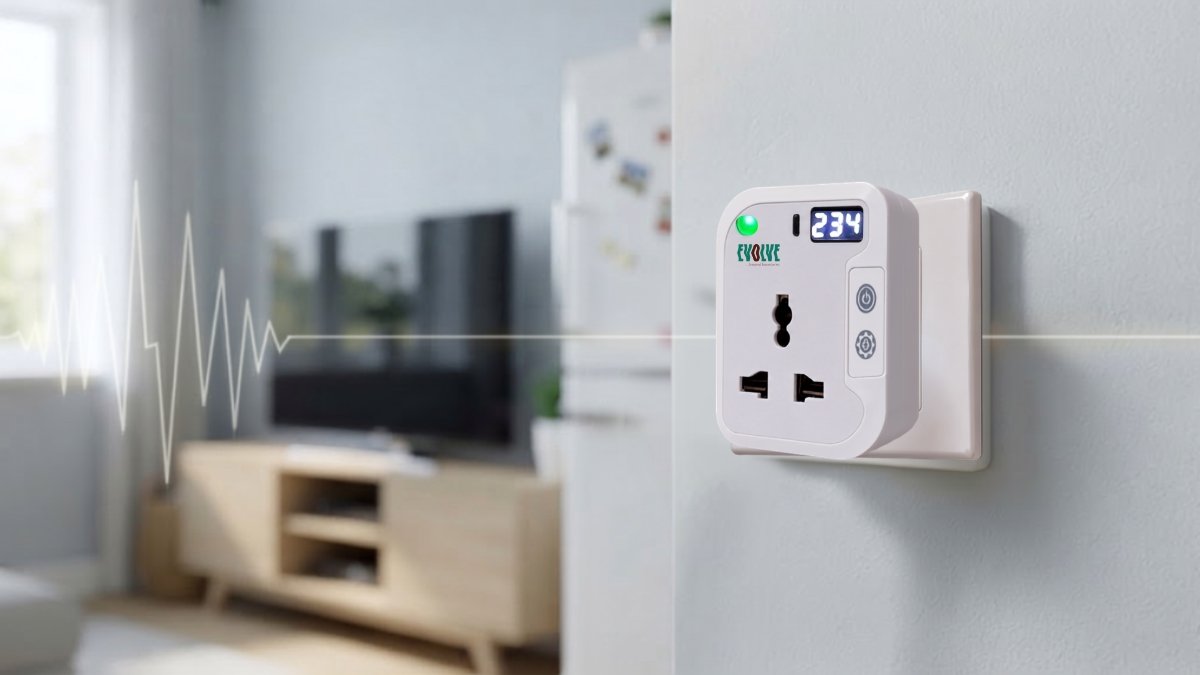
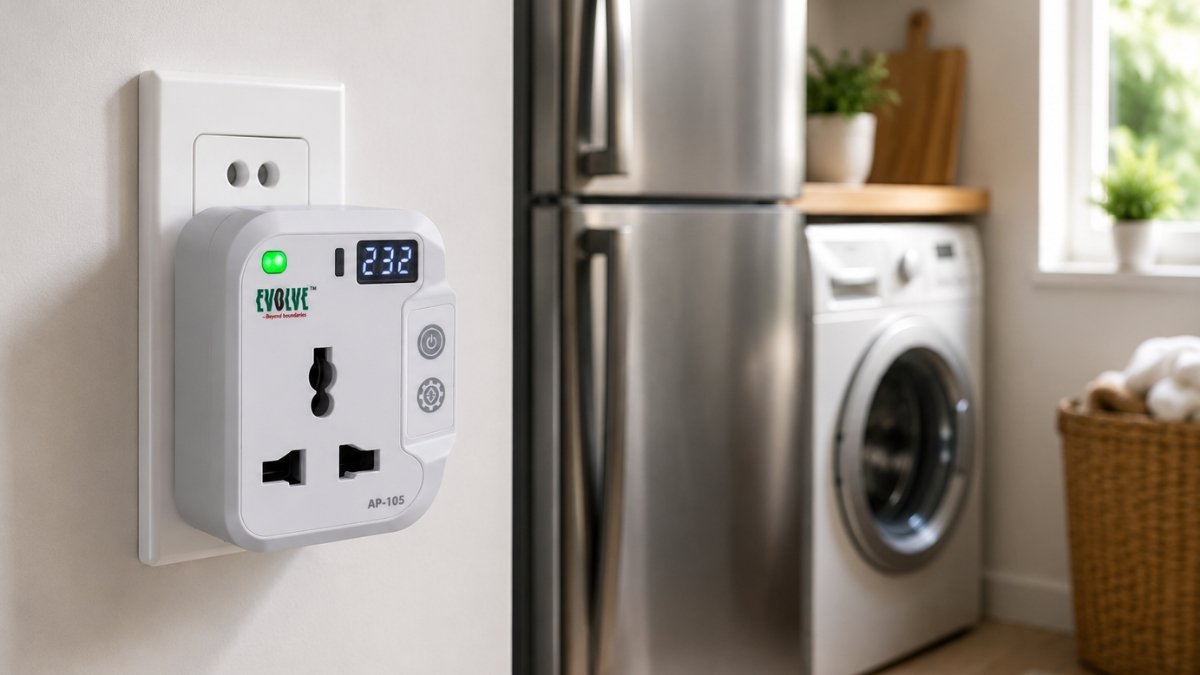
    The Evolve AP-105 is a compact, plug-and-play voltage and surge protector built by Akira Controls under their Evolve brand. Instead of installing anything complicated, you simply plug the AP-105 into your wall socket and connect your appliance to it. From there, it continuously monitors the incoming power and steps in whenever something goes wrong, whether that’s a sudden spike, a drop in voltage, or general power instability.

    It’s a good example of how Appliance Protection Plugs have evolved from simple surge strips into genuinely smart devices that actively watch over your electronics.

    What Makes It Stand Out

    Complete Power Protection

    The AP-105 shields connected appliances from both over-voltage and under-voltage conditions, along with general power disturbances. This matters because damage doesn’t only come from surges, voltage drops can be just as harmful to sensitive components over time.

    Built-In Display and LED Indicators

    Rather than working silently in the background with no feedback, the AP-105 includes a digital display showing real-time voltage and current readings, along with clear LED indicators. You can actually see when it’s protecting your device, which adds a layer of confidence you don’t get with a basic surge strip.

    Wide Voltage Range and Universal Compatibility

    The device operates across a voltage range of 110V to 600V and works with a universal socket design (BS 546 Type D), making it compatible with a wide range of appliances and plug types, from refrigerators and televisions to computers, routers, and small office equipment.

    Built to Handle Real-World Conditions

    With a temperature tolerance of -5°C to 50°C and humidity resistance up to 50% at 40°C, the AP-105 is designed for the kind of conditions Indian homes and offices actually experience, not just ideal lab settings.

    Technical Specifications at a Glance

    Specification Details
    Voltage Range 110 – 600V
    Frequency 50 Hz
    Power Rating Up to 1.6 kW
    Current 6 Amps
    Socket Type Universal Socket
    Pin Configuration BS 546 Type D
    Dimensions 60 x 70 x 75 mm
    Weight 150 g
    Warranty 1 Year

    What Real Users Are Saying

    The AP-105 has already built a track record with everyday users, and the feedback highlights exactly the kind of protection Appliance Protection Plugs are meant to provide.

    One user in Madurai reported that the device detected a sudden voltage spike and immediately switched to a warning light instead of letting the surge pass through, a real-time save that could have otherwise damaged connected equipment.

    Another user in Chennai shared that during a voltage fluctuation at their office, the AP-105 prevented their computer system from restarting until the power supply stabilized, avoiding the kind of repeated on-off cycling that damages hardware.

    A user in Bangalore noted that the plug cut power and flagged an overload while it was protecting an air cooler, confirming the device was actively doing its job rather than just sitting there as a passive accessory.

    Across the reviews, the consistent theme is reassurance: people plug it in, forget about it, and then are pleasantly surprised the one time it actually matters.

    Where It’s Most Useful

    The AP-105 is rated for appliances up to 1.6 kW, which covers a wide range of common household and office electronics, including:

    • Refrigerators and kitchen appliances
    • Televisions and home entertainment systems
    • Computers, routers, and networking equipment
    • Office equipment
    • Small industrial electronics

    Because it’s plug-and-play with no installation required, it’s just as easy to use at home, in an office, or even while traveling.

    Why This Matters for Your Wallet

    A single control board repair on a refrigerator or washing machine can easily cost several hundred rupees to a few thousand, not including labor and downtime. Appliance Protection Plugs like the AP-105 are a small upfront cost compared to what a single major repair would run, and unlike a repair bill, it’s a cost you only pay once, while the protection keeps working for years.

    At its current price with a 1-year warranty and 30-day return window, it’s a low-risk way to add a meaningful layer of protection to the appliances you rely on most.

    Final Thoughts

    Voltage instability isn’t something most people think about until it costs them a repair bill or an appliance replacement. The Evolve AP-105 is a solid, well-reviewed option in the growing category of Appliance Protection Plugs, offering real-time monitoring, a wide operating range, and the kind of plug-and-play simplicity that makes it easy to actually use, not just buy and forget in a drawer.

    If your home regularly deals with power fluctuations, especially during storms or peak-load hours, it’s worth adding a device like this to your refrigerator, TV, or home office setup before the next spike does the damage for you.


  • How Smart Irrigation Protects Your Pump Motor Too

    How Smart Irrigation Protects Your Pump Motor Too

    Most people think about Smart irrigation as a water-saving tool. And sure, that’s the headline benefit: fewer wasted gallons, lower water bills, healthier lawns that aren’t drowning or dying of thirst. But there’s a quieter benefit that almost nobody talks about until their pump burns out and they’re staring at a repair bill they didn’t see coming: your irrigation pump motor lives a much easier life when a smart system is running the show.

    If you’ve ever owned a pump, you know they’re not cheap to replace. And the sad part is, a lot of pump failures aren’t really about the pump being “bad”; they’re about how it was used. Motors get pushed too hard, run when they shouldn’t, or get switched on and off in ways that stress the internal components. Over time, that adds up. Smart irrigation happens to fix most of these bad habits without you even trying.

    The Problem With Old-School Timers

    Traditional irrigation timers are dumb in the most literal sense. They don’t know if it rained last night. They don’t know if the soil is already saturated. They just fire the pump on a schedule, rain or shine, dry season or monsoon.

    That means your pump motor could be starting up every single day, sometimes multiple times a day, whether the yard actually needs water or not. Every startup cycle puts a small amount of wear on the motor; there’s a surge of current the moment it kicks on, more friction, more heat. Multiply that by years of unnecessary cycles, and you’re looking at a motor that’s aged way faster than it should have.

    Fewer Cycles, Less Wear

    This is where Smart irrigation quietly earns its keep. These systems use weather data, soil moisture sensors, or both, to decide whether watering is actually necessary. No rain in the forecast and the soil’s dry? It runs. Storm just rolled through and the ground’s soaked? It skips the cycle entirely.

    Fewer unnecessary cycles means fewer startups for your pump. And since startup is genuinely the most stressful moment in a motor’s life- that jolt of current, the mechanical strain of going from a dead stop to full speed- cutting down on how often it happens has a real, measurable effect on how long the motor lasts.

    Smarter Systems Catch Problems Early

    A lot of newer smart controllers do more than decide when to water. Some are paired with flow sensors that monitor water pressure and flow rate in real time. If something’s off, a clogged line, a stuck valve, a leak- the system can flag it or shut things down automatically instead of letting the pump keep grinding away against a blockage.

    That matters more than people realize. A pump running against a closed or clogged valve doesn’t have anywhere for the water (and the pressure) to go. It’s basically working against itself, and that kind of resistance is exactly the sort of thing that overheats a motor or wears down its bearings prematurely. Older systems have no way of knowing this is happening. They just keep running until something breaks or someone notices the yard isn’t getting wet.

    Dry-Run Protection

    Pumps hate running dry. If a pump loses its water supply, say a well runs low, or a line gets disconnected, but keeps spinning anyway, it can overheat in minutes. No water means no cooling, and no lubrication for certain components either.

    Many Smart irrigation setups include dry-run protection as a built-in feature, automatically cutting power to the pump if it detects there’s no water moving through the system. It’s a small thing, but it’s often the difference between a pump that lasts a decade and one that dies in its second summer.

    Steadier Pressure, Steadier Motor

    Pressure spikes are another quiet killer of pump motors. When valves open and close abruptly, or when multiple zones try to draw water at once, pressure can swing wildly. That instability puts extra load on the motor and, over time, can loosen fittings or stress seals throughout the system.

    Smart controllers tend to stagger zones and manage flow more evenly, which keeps pressure more consistent. A motor running under steady, predictable conditions just doesn’t work as hard as one that’s constantly reacting to swings in demand.

    It’s Not Just About the Water Bill

    When people shop for Smart irrigation, they’re usually chasing lower water bills or a greener lawn. Fair enough, those are real, tangible perks. But the pump protection side of things is arguably just as valuable, especially if you’ve ever had to pay for an emergency pump replacement or repair.

    Think of it this way: every unnecessary cycle you skip, every dry-run shutdown, every pressure spike you avoid, that’s wear and tear your motor never has to deal with. It’s the kind of savings you don’t notice month to month, but you’ll absolutely notice five or ten years down the line when your pump is still running strong instead of sitting in a landfill.

    Final Thoughts

    If you’re on the fence about upgrading your irrigation setup, the water savings alone might be worth it. But don’t overlook the mechanical side of the equation. A Smart irrigation system isn’t just watching your lawn; it’s watching your equipment too, cutting down on the everyday stress that quietly shortens a pump motor’s life. Protecting your investment doesn’t always mean buying something new. Sometimes it just means giving what you already have an easier job to do.

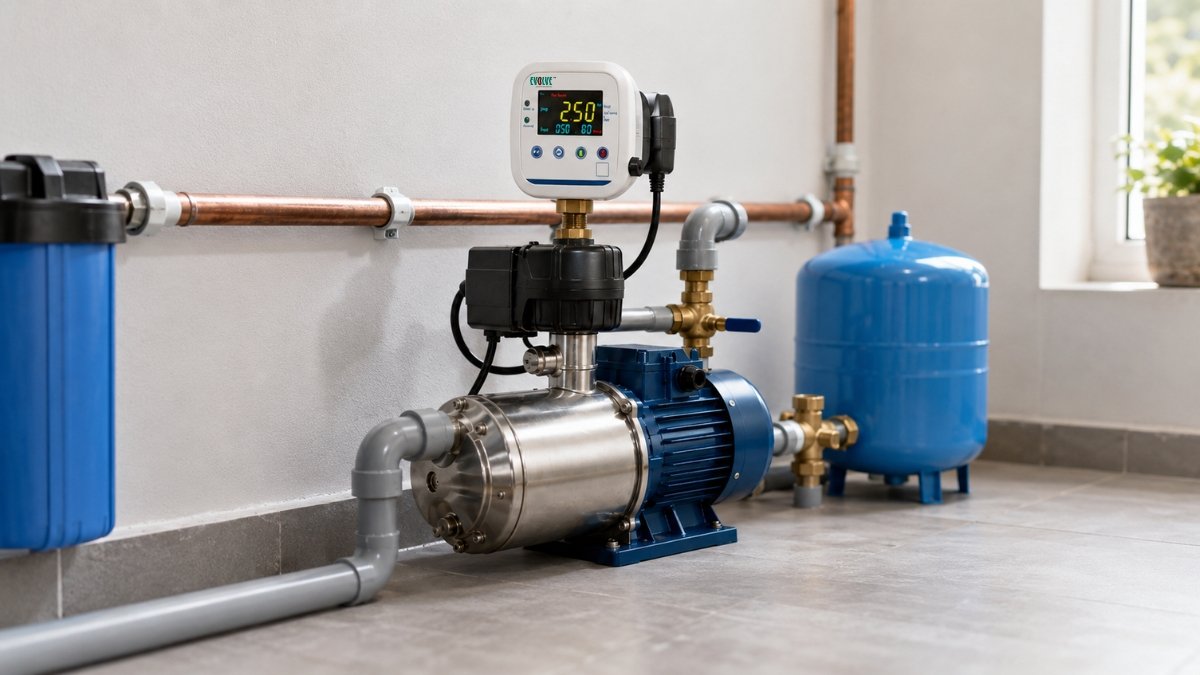
  • Do You Need a Pressure Booster Pump? 5 Signs to Watch For

    Do You Need a Pressure Booster Pump? 5 Signs to Watch For

    There’s nothing quite as annoying as standing in the shower, covered in soap, while the water trickles out like it’s doing you a personal favor. Or turning on two faucets at once and watching both of them practically give up. If any of that sounds familiar, you might be dealing with a low water pressure problem that a simple fix, a pressure booster pump, can solve.

    But before you go out and buy one, it’s worth understanding what these pumps actually do, and more importantly, whether your home even needs one. Not every plumbing issue is a pressure issue, and not every pressure issue needs a pump. So let’s break it down.

    What Exactly Is a Pressure Booster Pump?

    In simple terms, a pressure booster pump is a mechanical device installed in your home’s plumbing system to increase water pressure. It pulls water from your main supply line and pushes it through your pipes with more force, so it reaches every faucet, shower, and appliance at a consistent, usable pressure.

    These pumps are especially common in homes that sit at the top of a hill, in multi-story buildings where water has to travel upward against gravity, or in areas where the municipal water supply just isn’t that strong to begin with. They’re also popular in homes that rely on well water, since well pressure can be unpredictable depending on the pump, tank size, and depth of the well.

    Now, onto the real question: how do you know if you actually need one?

    1. Your Water Pressure Drops When You Use More Than One Fixture

    This is probably the most common sign, and the one most people notice first. You’re washing dishes, someone flushes the toilet upstairs, and suddenly your sink water slows to a dribble. Or you’re in the shower, and the washing machine kicks on, and your water pressure tanks.

    This happens because your home’s plumbing system simply doesn’t have enough pressure to serve multiple fixtures at once. A single pressure booster pump installed at your main water line can solve this by maintaining consistent pressure throughout the house, no matter how many taps are running at the same time.

    2. Upper Floors Get Noticeably Weaker Water Pressure

    If you live in a two-story or multi-story home, pay attention to whether the pressure upstairs feels weaker than downstairs. This is a classic sign of gravity working against your plumbing. Water has to travel up against gravity to reach the second or third floor, and if your system isn’t strong enough to begin with, that upward journey eats into the pressure even more.

    Booster pumps are commonly installed specifically to counter this effect, pushing water upward with enough force that your top-floor shower feels just as strong as the one on the ground floor.

    3. Your Water Heater Struggles to Keep Up

    Low pressure doesn’t just mean slow water; it can also throw off your water heater’s performance. If your hot water takes forever to reach the tap, or the temperature fluctuates randomly while you’re using it, weak incoming pressure could be part of the issue. Water heaters, especially tankless ones, often need a minimum flow rate to function properly, and if the pressure coming in is too low, they may struggle to heat water efficiently or consistently.

    4. You Notice It More After a Renovation or New Fixture Installation

    Sometimes low pressure isn’t a pre-existing issue; it shows up after you’ve added something new to your home. Installing a rainfall showerhead, a multi-jet shower system, a second bathroom, or even just upgrading to modern fixtures with tighter flow restrictors can expose weaknesses in your existing water pressure that you never noticed before.

    If your plumbing worked fine before the renovation but feels underpowered now, it’s not that your pipes suddenly got worse; it’s that your new fixtures are demanding more than your system can naturally provide. This is one of the more overlooked reasons homeowners end up installing a pump after a remodel.

    5. Your Municipal Supply or Well Just Doesn’t Deliver Enough Pressure

    Sometimes the issue isn’t your home at all; it’s what’s coming in from the source. If you’re on a municipal system, pressure can vary depending on your location relative to the water treatment plant, elevation, and how many other households are drawing from the same line during peak hours. If you’re on a well, pressure depends heavily on your well pump’s condition, tank size, and depth.

    You can actually test this yourself with a simple pressure gauge attached to an outdoor spigot. Most homes should sit somewhere between 40 and 60 psi. If you’re consistently reading below 40, that’s a strong sign the incoming supply itself is the bottleneck, and a booster pump would genuinely help rather than just masking a different problem.

    So, Do You Actually Need One?

    If you’re nodding along to two or more of these signs, there’s a good chance a pressure booster pump would make a noticeable difference in your daily life. That said, it’s worth ruling out other causes first; clogged pipes, a partially closed main shutoff valve, or a failing pressure regulator can all mimic the same symptoms without a pump being the right fix.

    A quick pressure test, and maybe a call to a plumber if you’re unsure, can save you from installing equipment you didn’t actually need. But if your pressure truly is low at the source, a booster pump is one of the most reliable ways to get your water, hot or cold, upstairs or down, flowing the way it should.

    At the end of the day, nobody wants to feel like they’re fighting their own plumbing just to rinse the shampoo out of their hair. If that’s been your reality, it might be time to look into a pump.

  • Water Management Solutions That Prevent Both Overflow and Dry Run

    Water Management Solutions That Prevent Both Overflow and Dry Run

    If you’ve ever walked into your bathroom to find water pouring over the edge of an overhead tank, or worse, turned on the tap and gotten nothing but a hiss of air, you already know why this topic matters. Both problems sound like opposites, too much water versus too little, but they usually come from the same root cause: nobody is actually watching the tank.

    Most homes and buildings still rely on manual checks. Someone climbs up, peeks in, guesses how full it is, and switches the motor on or off based on a hunch. That works fine until it doesn’t. A missed morning turns into a flooded terrace. A forgotten evening turns into a dry shower the next day. Multiply that across an apartment complex or a factory, and you’re looking at wasted water, wasted electricity, and a fair amount of frustration.

    The good news is that this is a solved problem. Water management solutions built around simple sensors and automatic controls can take the guesswork out entirely, and they’re a lot more affordable than most people assume.

    Why Overflow and Dry Run Happen in the First Place

    Before jumping into fixes, it helps to understand why these two issues keep showing up even in households that are otherwise careful.

    Overflow usually happens because of:

    • Motors left running while someone gets distracted or steps out

    • No physical indicator showing the tank is nearly full

    • Power cuts that reset timers, so the pump restarts from zero and overshoots

    • Multiple people in a household assuming “someone else” turned it off

    Dry running usually happens because of:

    • The borewell or source running low, but the motor keeps trying to pump anyway

    • No cutoff when the tank is genuinely empty, causing motor damage over time

    • Irregular municipal water supply timings that catch people off guard

    • A pump switch left in the “on” position out of habit, without checking the source first

    Notice the pattern: in both cases, the actual failure is a lack of real-time information. Nobody knew the tank was full. Nobody knew the source had run dry. Fix that information gap, and you fix both problems at once.

    The Core Idea Behind Good Water Management Solutions

    A properly designed system does three things automatically:

    1. Senses water level continuously, not just at the top and bottom, but throughout the tank

    2. Reacts before the extreme happens, cutting power to the motor before overflow, and cutting it before the source runs dry enough to damage the pump

    3. Communicates status to whoever needs it: a light, an alarm, a phone notification, or all three

    That’s really the whole framework. Everything else is just implementation detail based on your budget and how tech-savvy you want the setup to be.

    Practical Options, From Simple to Smart

    1. Float Valve Systems

    This is the oldest trick in the book, and it still works. A mechanical float rises with the water and physically shuts off the inlet valve when the tank is full. It’s cheap, needs no electricity, and rarely fails. The downside is it only solves overflow; it does nothing for dry running, and it can’t tell you anything remotely, so you still won’t know if the source has stopped.

    2. Water Level Controllers with Dual Sensors

    These use two sets of probes, one in the overhead tank, one in the sump or borewell. The controller automatically starts the motor when the tank is low and the source has water, and stops it when the tank is full or the source is dry. This single addition solves both problems at once and is honestly the sweet spot for most homes: not too expensive, no ongoing subscription, and it just works quietly in the background.

    3. Smart IoT-Based Monitoring

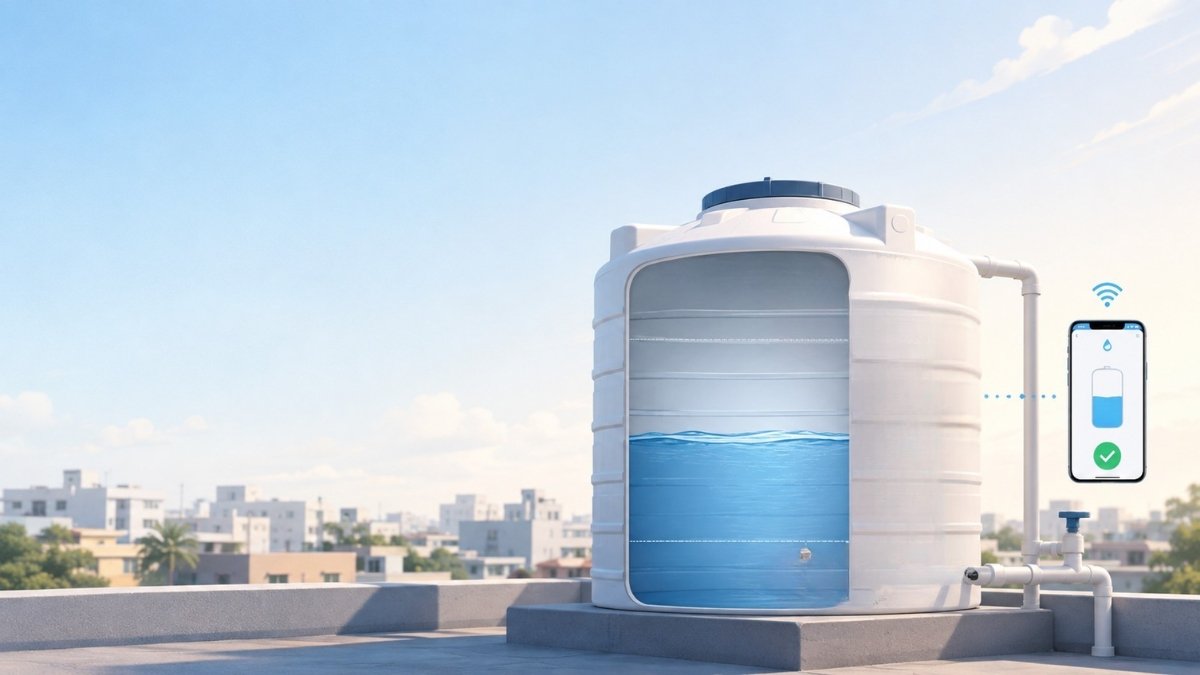
    For larger properties, apartment complexes, or anyone who wants full visibility, IoT-enabled tanks send live data to a mobile app. You can check tank levels from anywhere, get alerts before a shortage happens, and even track daily consumption patterns to spot leaks early. This is a bigger investment, but the ability to plan around actual data rather than guesses pays off quickly for buildings with shared water systems.

    4. Rainwater Harvesting Integration

    This one’s less about sensors and more about supply. Pairing your storage tank with a rainwater harvesting setup means the source itself is less likely to run dry, especially during monsoon-heavy regions. It won’t stop overflow on its own, but combined with a level controller, it reduces how often you’re anywhere near either extreme.

    5. Solar-Powered Backup Controllers

    Power cuts are one of the sneakier causes of both overflow and dry run, since timers and controllers reset when electricity drops out unexpectedly. A small solar backup for the controller circuit (not the pump itself, which draws too much current) keeps the sensing and cutoff logic running even when the grid goes down.

    Choosing What Fits Your Situation

    There’s no single “best” option here; it genuinely depends on scale.

    • Single-family home, tight budget: A float valve for overflow plus a basic dual-sensor controller covers 90% of the risk for a modest cost.

    • Apartment building or shared complex: IoT monitoring is worth the extra spend, since it prevents disputes between residents and gives the facility manager actual data instead of complaints.

    • Areas with unreliable power or unpredictable municipal supply: Add the solar backup and consider rainwater harvesting so the source itself is more dependable.

    A Few Things Worth Checking Before You Install Anything

    • Make sure sensors are rated for your tank’s material (plastic, concrete, and metal tanks sometimes need different sensor types)

    • Ask about warranty on the motor cutoff relay specifically, since that’s the component that fails most often

    • If you’re in a hard water area, look for corrosion-resistant probes; regular ones degrade faster than you’d expect

    • Test the dry-run cutoff manually once a year; sensors can get coated with sediment over time and stop reading accurately

    Final Thoughts


    Overflow and dry running feel like two separate headaches, but they really come down to the same missing piece: knowing what’s actually happening inside the tank at any given moment. Once you close that information gap with the right sensors and controllers, both problems tend to disappear together. Whether you go with a fifty-rupee float valve or a full app-connected system, the goal is the same: water that’s there when you need it, and never spilling out when you don’t.

  • How a Power Protection Plug Detects and Stops Voltage Fluctuations

    How a Power Protection Plug Detects and Stops Voltage Fluctuations

    If you’ve ever watched your lights dim for no reason, heard your fridge hum a little louder than usual, or opened your laptop charger only to feel it unusually warm, you’ve already met voltage fluctuations. It’s one of those household problems that doesn’t announce itself loudly. It just quietly wears down your appliances, one spike or dip at a time, until something finally gives out and you’re left wondering why your two-year-old TV suddenly stopped working.

    This is exactly the gap a power protection plug is built to close. But how does a small plastic device sitting between your wall socket and your appliance actually know when something’s wrong with the power? And more importantly, how does it stop that bad power from ever reaching your gadgets? Let’s break it down in plain language.

    First, What Exactly Is a Voltage Fluctuation?

    In India, the standard household supply is meant to sit around 220-230V. In the real world, though, that number moves around constantly. Heavy motors switching on nearby, transformer overloads during peak hours, lightning activity, or even something as simple as your neighborhood drawing more power in summer can push voltage up or down.

    A few common types of fluctuation:

    • Overvoltage – supply climbs well above the safe range, often during load-shedding recovery or grid switching.
    • Undervoltage (brownout) – supply drops below normal, common during peak evening hours or in rural and semi-urban areas.
    • Surges and spikes – short, sudden jumps in voltage, frequently caused by lightning strikes or heavy machinery switching off nearby.
    • Frequency and load irregularities – less talked about, but they still stress sensitive electronics over time.

    None of these are things you can see with the naked eye. Your appliance is either silently absorbing the damage or, if you’re lucky, tripping a fuse before things get worse.

    How Does a Power Protection Plug Actually “Detect” This?

    This is where the internal electronics of a device like the Evolve AP 105 come in. Instead of waiting for something to go wrong at the appliance level, the plug sits at the very first point of contact, the wall socket, and continuously reads the incoming voltage in real time.

    Here’s roughly what happens inside:

    1. Continuous voltage sensing. The internal circuitry monitors the live supply every fraction of a second, comparing it against a safe operating range.
    2. Threshold comparison. The moment the reading moves outside the acceptable window- too high, too low, or an abrupt spike- the built-in controller flags it instantly.
    3. Instant cutoff. Rather than letting that abnormal power pass through to your appliance, the plug interrupts the circuit. Your device simply stops receiving power for a moment, which is far safer than letting it receive the wrong power.
    4. Restart delay. Once the plug senses the supply has stabilized and stayed steady for a set period, it reconnects the power automatically. This delay matters a lot; it stops your compressor-based appliances like fridges and ACs from restarting the second voltage looks “okay,” which is often when a second spike is most likely to happen.
    5. Visual status indication. LED indicators show you exactly what’s happening: normal supply, a detected fault, or overload, so you’re never left guessing why an appliance isn’t turning on.

    This entire detect-and-cut sequence typically happens faster than you can blink, long before the abnormal voltage has any real chance to reach the sensitive components inside your appliance.

    Why This Matters More Than People Realize

    A lot of people assume their appliances are already protected because they have some kind of internal fuse or stabilizer built in. In reality, most home electronics- TVs, refrigerators, routers, computers, small industrial equipment- are designed for a narrow voltage band. Anything outside that band doesn’t always trip a fuse cleanly; sometimes it just quietly stresses capacitors and circuit boards until they degrade.

    A dedicated power protection plug acts as a first line of defense specifically for this. It doesn’t try to regulate or correct the voltage like a stabilizer does; it simply refuses to pass on unsafe power in the first place. That distinction is important: prevention rather than correction, which means less wear on your appliance’s internal components over its lifetime.

    Real-world feedback from users backs this up too. One AP 105 user in Madurai described the plug switching to a red indicator the moment it sensed a sudden spike, cutting power before it could reach the connected devices. Another user in Chennai shared how, during repeated voltage swings at their office, the plug kept the connected system off until the supply had genuinely stabilized, and only then allowed a safe restart, protecting the system from the kind of rapid on-off cycling that damages electronics the most.

    What to Look for in a Good Power Protection Plug

    If you’re considering one for your home or office, a few practical things are worth checking:

    • Wide voltage range coverage – a plug that only handles minor fluctuations won’t help much during a real spike or brownout.
    • Restart delay function – this protects compressor-based appliances specifically.
    • Clear indicators – you should be able to tell at a glance whether the supply is normal, faulty, or overloaded.
    • Plug-and-play design – no electrician or wiring changes should be needed.
    • Build quality – devices exposed to Indian summers and humid coastal climates need decent temperature and moisture tolerance.

    The Evolve AP 105, for instance, is built for a 110-600V range, includes surge and spike protection, works across a -5°C to 50°C temperature band, and comes with a universal socket so it fits most Indian appliances without adapters.

    The Bottom Line

    Voltage fluctuations aren’t rare events reserved for stormy nights; they happen more often than most of us notice, and they add up in ways that shorten the life of our appliances. A power protection plug doesn’t try to fix the electricity coming into your home; it simply stands guard, watching the supply constantly, and refusing to let anything unsafe through to your TV, fridge, computer, or office equipment.

    It’s a small, inexpensive habit change: plug it in once, and it quietly does its job in the background, appliance after appliance, fluctuation after fluctuation.

  • Smart Irrigation for Small Farms: Is It Worth the Investment?

    Smart Irrigation for Small Farms: Is It Worth the Investment?

    If you’ve spent any time around small farmers lately, you’ve probably heard someone mention smart irrigation. Maybe a neighbor installed soil sensors last season. Maybe you saw an ad for an app that promises to water your crops “automatically, at the perfect time.” And maybe, like a lot of people running a small operation, your first reaction was somewhere between curiosity and skepticism.

    That skepticism makes sense. Small farms don’t have the budget to gamble on shiny tech that sounds good in a sales pitch but falls apart in the field. So let’s cut through the noise and actually look at what smart irrigation is, what it costs, what it saves, and whether it makes sense for an operation your size.

    What “Smart Irrigation” Actually Means

    At its core, smart irrigation is a system that uses data rather than guesswork to decide when and how much to water. Instead of running the sprinklers every Tuesday and Friday because that’s what your dad did, the system checks soil moisture, weather forecasts, evapotranspiration rates, and sometimes even plant stress indicators, then adjusts watering accordingly.

    Some setups are dead simple: a soil moisture sensor connected to a timer that shuts off irrigation once the ground has enough water. Others are more elaborate, combining weather stations, drip lines, and a phone app that lets you control zones from wherever you happen to be standing (or sitting, coffee in hand, nowhere near the field).

    The point isn’t the gadgets. The point is watering based on what the crop actually needs, not on habit.

    The Case for Investing

    Water savings are real, not marketing fluff. Most studies and farmer reports put water savings from smart irrigation somewhere between 20% and 50%, depending on the crop, the climate, and how inefficient the old system was to begin with. If you’re in a region where water is metered, rationed, or just plain expensive, that adds up fast.

    You stop guessing. Overwatering is one of the sneakiest ways small farms lose money. It doesn’t just waste water; it leaches nutrients out of the soil, encourages root disease, and can actually reduce yields. A system that tells you the soil is already at field capacity saves you from dumping more water (and more of your fertilizer investment) down the drain, literally.

    Labor gets lighter. If you’re a one- or two-person operation, walking the fields every morning to check soil by hand or manually opening and closing valves eats into hours you don’t have. Automating that frees you up for the parts of farming that actually need a human: scouting for pests, managing harvest timing, running the business side.

    Yields often go up, not just water usage down. Consistent, right-sized watering reduces plant stress. Less stress generally means healthier plants and steadier yields, especially in water-sensitive crops like tomatoes, peppers, and berries.

    The Case for Hesitating

    Here’s where I’ll be straight with you: smart irrigation isn’t free, and it isn’t instant.

    Upfront cost varies wildly. A basic soil-sensor-plus-timer setup for a small plot might run a few hundred dollars. A more complete system with multiple zones, weather integration, and drip infrastructure can run into the thousands. If your farm is under a few acres, that cost needs to be weighed carefully against what you’ll actually save.

    Connectivity and power can be a headache. Rural areas don’t always have reliable cell signal or Wi-Fi, and some systems lean hard on connectivity to function well. If your fields are in a dead zone, you may need to invest in a gateway or hotspot just to make the system talk to your phone.

    There’s a learning curve. Even simple systems require some setup and calibration. Sensors placed in the wrong spot give bad data, and bad data leads to bad watering decisions, sometimes worse than just watering on a schedule.

    Maintenance is ongoing. Sensors get knocked around by equipment, chewed by rodents, or buried under mulch. Batteries die. Software needs updates. It’s not “set it and forget it” the way some marketing suggests.

    So, Is It Worth It?

    Honestly, it depends on three things: your crop, your water costs, and your current level of inefficiency.

    If you’re growing high-value, water-sensitive crops- think vegetables, fruit, or anything you’re selling at a premium- the return on investment tends to come faster because both water savings and yield improvements matter more to your bottom line.

    If your water is cheap or plentiful and you’re already pretty disciplined about watering schedules based on experience, the gains from smart irrigation might be smaller and slower to show up.

    If you’re farming in a drought-prone region, or your water bill has been climbing, the math tends to favor making the switch sooner rather than later.

    A reasonable way to test the waters, so to speak, is to start small. Install sensors in your highest-value or most problematic field first. Track your water use and yields for a season before and after. Let the numbers, not the sales pitch, tell you whether to expand.

    A Few Practical Tips If You Decide to Try It

    • Start with one zone or crop, not your whole farm, so you can learn the system without high stakes.
    • Choose a system with an intuitive app; you’re a farmer, not an IT technician.
    • Ask about offline functionality in case your connectivity is spotty.
    • Factor in the cost of sensor maintenance and replacement, not just the initial purchase.
    • Talk to other small farmers in your area who’ve already made the switch. Real feedback beats a product brochure every time.

    The Bottom Line

    Smart irrigation isn’t a magic fix, and it isn’t right for every small farm on day one. But for a lot of growers, especially those dealing with water costs, labor shortages, or inconsistent yields, it pays for itself faster than expected, often within a season or two, once water savings and reduced crop loss are factored in.

    The real question isn’t whether the technology works. It does. The question is whether your specific farm, your specific crops, and your specific water situation make the investment worthwhile right now. Start small, track your results, and let your own field tell you the answer.

  • Does Your Home EV Charger Need Surge Protection? Here’s the Answer.

    Does Your Home EV Charger Need Surge Protection? Here’s the Answer.

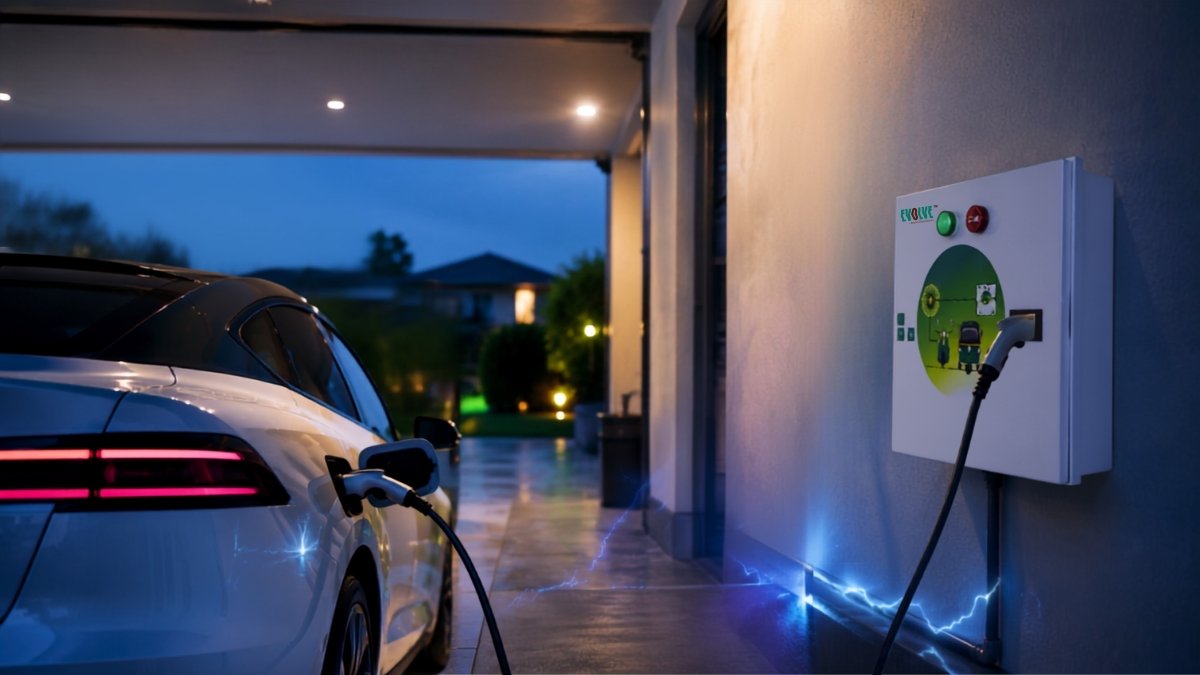
    If you’ve just installed a Level 2 charger in your garage, congratulations- you’ve made one of the smartest upgrades a modern homeowner can make. But there’s a question a lot of new EV owners don’t think about until something goes wrong: what happens to that charger during a power surge?

    It’s a fair question. Your EV charger isn’t a toaster. It’s a piece of equipment that handles a lot of current, stays plugged in around the clock, and is directly wired into your home’s electrical panel. So does it actually need its own layer of protection, or is that just something an electrician says to upsell you? Let’s break it down.

    What Exactly Is a Power Surge?

    A power surge is a sudden spike in voltage that lasts a fraction of a second but can do lasting damage. Surges come from two main sources:

    • External surges, such as lightning strikes, utility grid switching, or downed power lines near your home.
    • Internal surges, caused by large appliances cycling on and off, like your AC unit, water heater, or well pump. These happen far more often than most people realize.

    Most homeowners assume surges are rare, dramatic events tied to storms. In reality, small internal surges happen multiple times a day in an average household. They’re usually too minor to notice, but over time, they wear down the internal components of anything plugged into your electrical system.

    Why EV Chargers Are Particularly Vulnerable

    Here’s where things get specific to EV owners. A home charger isn’t a simple device; it’s got circuit boards, communication modules (for scheduling, app connectivity, and safety monitoring), and sensitive electronics that regulate the flow of power to your car’s battery.

    Unlike a lamp or a phone charger, your EV charger is:

    1. Always connected. It sits plugged into a dedicated circuit continuously, meaning it’s exposed to every fluctuation on that line.
    2. Expensive to replace. Level 2 chargers typically cost anywhere from $400 to $1,200, not including installation.
    3. Tied to a high-amperage circuit. These circuits (usually 40–60 amps) can experience more dramatic swings than a standard 15-amp outlet.

    A single strong surge, say, from a nearby lightning strike, can fry the internal electronics instantly. But it’s often the repeated smaller surges that cause the real damage: a slow degradation that eventually leads to charger failure, error codes, or inconsistent charging speeds long before you’d expect the unit to fail.

    So, Does Your Charger Actually Need Surge Protection?

    In most cases, yes, and here’s why manufacturers and electricians increasingly recommend it as a standard part of installation, not an optional add-on.

    EV charger protection matters for three main reasons:

    • It protects a significant investment. Between the charger itself and the labor to install it, you’re looking at real money. A 50–150 surge protection device is cheap insurance against replacing the whole unit.
    • It protects your vehicle. In rare cases, a severe surge that passes through a damaged charger can potentially affect your car’s onboard charging system too, a far more expensive repair than the charger itself.
    • It reduces downtime. If your only charger goes down, you’re stuck relying on public charging stations or slower outlets until it’s repaired or replaced. Surge protection reduces the odds of that inconvenience altogether.

    What Are Your Surge Protection Options?

    You don’t need to guess here; there are a few established ways to add EV charger protection to your setup, and most electricians will recommend one of the following:

    1. Whole-Home Surge Protector Installed at your main electrical panel. This device protects everything in your home, including your EV charger, from major external surges. It’s the most comprehensive option and a smart investment regardless of whether you own an EV.
    2. Dedicated Surge Protection Device (SPD) at the Charger Circuit: This is installed specifically on the circuit that feeds your charger, offering an extra layer of defense closer to the source. It’s a good complement to whole-home protection, especially for high-value chargers.
    3. Built-In Surge Protection: Some newer EV chargers come with surge protection already built into the unit. If you’re shopping for a charger, this is worth checking, since it may reduce (though not eliminate) the need for additional external protection.

    Most electricians recommend pairing a whole-home surge protector with a dedicated device at the charger’s circuit, especially if you live in an area prone to storms or have an older electrical panel that hasn’t been upgraded in a while.

    Signs Your Charger May Have Already Been Affected

    If you haven’t installed surge protection yet, keep an eye out for:

    • Charging sessions that start and stop unexpectedly
    • Error codes appearing more frequently
    • Slower charging speeds than usual
    • The charger’s display or indicator lights behaving oddly
    • Unresponsive app connectivity or scheduling features

    Any of these could point to underlying electrical damage that’s been building up over time, not necessarily a one-time failure.

    The Bottom Line

    Surge protection isn’t a scare tactic; it’s a practical safeguard for a device that’s expensive, always connected, and more exposed to electrical fluctuations than most people assume. Whether you go with a whole-home surge protector, a dedicated device for your charging circuit, or a charger with built-in protection, adding EV charger protection is one of those small upfront decisions that can save you a lot of hassle (and money) down the road.

    If you’re not sure what your current setup includes, it’s worth having a licensed electrician take a look. A quick inspection now could be the difference between years of trouble-free charging and an unexpected repair bill later.

  • How Smart Water and Power Management Solutions Help Reduce Household Utility Costs

    How Smart Water and Power Management Solutions Help Reduce Household Utility Costs

    Every month, the same routine plays out in millions of homes: the utility bills arrive, and somewhere between opening the envelope and paying it, there’s a small sigh. Water bills creep up. Electricity costs spike during summer or winter extremes. And most of us have no real idea why, we just know the number is higher than we’d like.

    This is exactly the gap that Water and Power Management Solutions are designed to close. They give homeowners visibility into where their money is actually going, and more importantly, the tools to do something about it. Let’s talk about how they work, and why more households are turning to them.

    The Problem With “Guessing” Your Usage

    Most of us manage utilities reactively. We notice the bill, maybe we feel a twinge of guilt about long showers or leaving lights on, and then life moves on until the next bill arrives. There’s no real feedback loop, no way to know that a running toilet has been wasting water for three weeks, or that an old refrigerator is quietly eating twice the electricity it should.

    That lack of visibility is expensive. Studies on residential water use consistently show that leaks alone can account for thousands of gallons wasted per household every year, often without a single visible drip. Electricity waste is similar, phantom loads from devices left plugged in, inefficient HVAC scheduling, and appliances running at odd hours all add up quietly.

    This is where smart Water and Power Management Solutions change the game. Instead of guessing, you get data.

    What “Smart” Actually Means Here

    When people hear “smart home,” they often picture voice assistants or app-controlled lightbulbs. But the more practical, wallet-friendly side of smart home tech is monitoring and automation, systems that watch how you use water and power, then help you use less of both without sacrificing comfort.

    A few common components:

    • Smart water meters and leak sensors, These track flow in real time and alert you the moment something unusual happens, like a pipe leaking overnight or a sprinkler system that didn’t shut off.
    • Smart power monitors, Installed at the breaker panel or on individual outlets, these show exactly which appliances are consuming the most energy, often broken down by hour or by device.
    • Smart thermostats, These learn your schedule and adjust heating and cooling automatically, cutting one of the largest slices of a typical power bill.
    • Automated irrigation controllers, These use weather data to water lawns only when needed, instead of running on a fixed schedule regardless of rainfall.
    • App-based dashboards, The connective tissue that pulls all this data together so you can actually see trends, not just isolated numbers.

    Individually, each of these tools solves a small problem. Together, they form a genuinely effective Water and Power Management Solutions system.

    Where the Actual Savings Come From

    It’s worth being specific here, because “smart technology saves money” is a vague promise until you break it down.

    1. Leak detection stops silent waste. A single undetected leak can add a meaningful chunk to a water bill before anyone notices. Sensors that flag abnormal flow patterns catch this early, sometimes before the homeowner even realizes there’s a problem.
    2. Real-time power data changes behavior. There’s a well-documented psychological effect: when people can actually see their energy use in real time, they use less of it. Simply knowing that the water heater or old air conditioner is the biggest energy hog in the house is often enough to prompt a fix, an upgrade, or a schedule change.
    3. Automation removes human error. Smart thermostats and irrigation systems don’t forget to turn off, don’t run on scorching days by mistake, and don’t ignore a rainy forecast. They act on data, not habit.
    4. Predictive maintenance avoids costly repairs. Catching a small issue, a dripping valve, a struggling compressor, before it becomes a major one saves money not just on utility bills but on repair and replacement costs down the line.

    A Realistic Look at Cost vs. Payoff

    It’s fair to ask: do these systems actually pay for themselves? For most households, yes, though the timeline depends on what’s installed. A basic leak sensor is inexpensive and can prevent a single costly water disaster from ever happening. A smart thermostat often pays for itself within a year or two through reduced heating and cooling costs. Whole-home energy monitors take a bit longer to justify, but the ongoing savings, plus the avoided cost of undetected problems, tend to add up over time.

    The bigger point is that this isn’t an all-or-nothing decision. Households can start small, with a single smart plug or leak sensor, and expand their Water and Power Management Solutions setup as they see results.

    Getting Started Without Overwhelm

    For anyone curious but hesitant, here’s a simple, low-pressure way to begin:

    1. Start with one high-impact device, a smart thermostat or a leak sensor near the water heater.
    2. Check the app data weekly for the first month to spot obvious patterns.
    3. Fix the easy wins first (a leak, a forgotten space heater, an outdated appliance running constantly).
    4. Add another device once the first one proves its value.

    There’s no need to renovate the entire house overnight. The goal is steady, informed improvement, not a complicated tech project.

    The Bigger Picture

    Reducing utility costs isn’t just about saving a few dollars each month, though that matters. It’s also about using resources responsibly, avoiding unnecessary waste, and having a home that quietly runs more efficiently in the background. Water and Power Management Solutions give households the visibility and control that used to be reserved for utility companies alone, and that shift, small as it sounds, tends to change how people think about their homes entirely.

    At the end of the day, the appeal isn’t really about gadgets. It’s about no longer being surprised by the bill.


  • Why Hospitals and Critical-Load Facilities Need High-Capacity Phase Protection

    Why Hospitals and Critical-Load Facilities Need High-Capacity Phase Protection

    Walk into any hospital at 3 a.m., and you’ll notice something most patients never think about: the building never really sleeps. Ventilators keep cycling. Monitors keep beeping. Refrigeration units keep vaccines and blood products at exact temperatures. None of that happens by accident; it happens because the electrical system behind the walls is doing its job, quietly, minute after minute.

    The problem is that electrical systems don’t always cooperate. Voltage spikes, phase imbalances, and sudden surges are a normal part of running a large facility, especially one packed with heavy medical equipment, HVAC systems, imaging machines, and server rooms. In most buildings, a power blip is an inconvenience. In a hospital, it can be the difference between a stable patient and an emergency.

    That’s why high-capacity phase protection isn’t a “nice to have” for hospitals and other critical-load facilities. It’s foundational infrastructure, on the same level as backup generators or fire suppression systems.

    What Actually Goes Wrong Without It

    Most people picture power problems as total blackouts, but the more common and more damaging issues are quieter than that. Voltage sags, phase loss, and surges caused by lightning strikes, grid switching, or even large equipment cycling on and off within the building itself can degrade or destroy sensitive electronics over time.

    Hospitals run three-phase power systems to handle heavy loads efficiently. When one phase drops out or becomes unbalanced, motors overheat, compressors fail, and diagnostic equipment can throw errors or shut down mid-procedure. Multiply that risk across dozens of departments- ICU, radiology, pharmacy, surgical suites, data centers- and it’s easy to see why a single unprotected panel can cascade into a facility-wide problem.

    This is where proper surge protection earns its keep. A well-designed system doesn’t just react to a catastrophic event; it continuously filters out the smaller disturbances that wear down equipment long before anyone notices a visible failure.

    Layered Protection, Not a Single Fix

    Effective protection in a hospital setting rarely comes from one device. It’s a layered approach that typically includes:

    • Facility-level surge protection installed at the main electrical panel to absorb large transient spikes before they spread through the building.
    • Sub-panel and branch circuit protection for departments running especially sensitive or expensive equipment.
    • Point-of-use protection at individual outlets and equipment stations, where a power protection plug or appliance protection plug adds a final layer of defense for critical machines like infusion pumps, monitors, and lab analyzers.

    Think of it like a series of nets. The big net at the main panel catches the largest surges. Smaller nets closer to the equipment catch what slips through. By the time power actually reaches a ventilator or an MRI machine, it’s been filtered several times over.

    Water and Power Are More Connected Than People Assume

    Hospitals also depend heavily on water systems,x sterilization, cooling towers, dialysis units, and general facility operations all need a steady, well-managed water supply. What often gets overlooked is how closely water and power systems interact. Pumps, valves, and treatment equipment all run on electricity, and a power disturbance that damages a pump controller can just as easily disrupt water delivery as it can disrupt a monitor.

    This is why many facilities are moving toward integrated water and power management solutions rather than treating the two as separate problems. When electrical protection and water management solutions are planned together, a facility gets a much clearer picture of where vulnerabilities actually sit. A surge that takes out a control board for a water pump is just as disruptive as one that takes out a piece of medical equipment, even if it’s less visible to staff and patients.

    The Cost of Doing Nothing

    It’s tempting to think of phase protection as a line item to trim during budget season. But the real cost of skipping it shows up later, in ways that are much harder to plan for:

    • Replacing high-end diagnostic and imaging equipment damaged by repeated surges
    • Emergency downtime while systems are repaired or replaced
    • Compliance issues if backup and protective systems don’t meet regulatory standards
    • The less quantifiable, but very real, risk to patient safety when equipment fails at the wrong moment

    Compared to those outcomes, a properly sized protection system is a modest investment. It’s also one that tends to pay for itself simply by extending the life of equipment that would otherwise need early replacement.

    What to Look for When Upgrading

    Facilities managers evaluating their protection setup should be asking a few practical questions: Is the surge protection rated for the actual load of the facility, or was it sized for a much smaller building? Are individual departments protected, or does the whole system rely on one point of failure at the main panel? And are water systems included in the planning conversation, or treated as an afterthought?

    A facility that can answer those questions with confidence is in a much stronger position than one that’s only thinking about power protection after something has already gone wrong.

    Final Thought

    Hospitals don’t get to pause operations while the power grid sorts itself out. Every disturbance that reaches sensitive equipment carries real consequences, for the budget and, more importantly, for patient care. High-capacity phase protection, paired with thoughtful water and power management solutions, isn’t about chasing every possible failure. It’s about building a facility that can absorb the everyday chaos of the electrical grid without ever letting patients feel it.