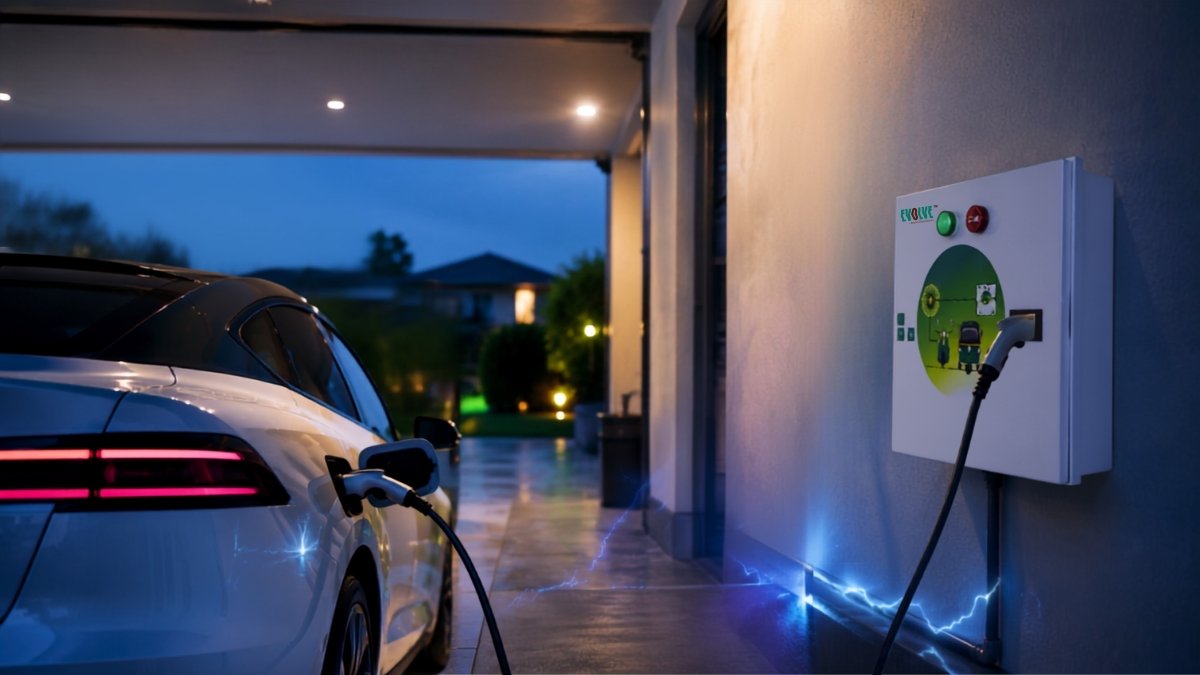
If you’ve just installed a Level 2 charger in your garage, congratulations- you’ve made one of the smartest upgrades a modern homeowner can make. But there’s a question a lot of new EV owners don’t think about until something goes wrong: what happens to that charger during a power surge?
It’s a fair question. Your EV charger isn’t a toaster. It’s a piece of equipment that handles a lot of current, stays plugged in around the clock, and is directly wired into your home’s electrical panel. So does it actually need its own layer of protection, or is that just something an electrician says to upsell you? Let’s break it down.
What Exactly Is a Power Surge?
A power surge is a sudden spike in voltage that lasts a fraction of a second but can do lasting damage. Surges come from two main sources:
- External surges, such as lightning strikes, utility grid switching, or downed power lines near your home.
- Internal surges, caused by large appliances cycling on and off, like your AC unit, water heater, or well pump. These happen far more often than most people realize.
Most homeowners assume surges are rare, dramatic events tied to storms. In reality, small internal surges happen multiple times a day in an average household. They’re usually too minor to notice, but over time, they wear down the internal components of anything plugged into your electrical system.
Why EV Chargers Are Particularly Vulnerable
Here’s where things get specific to EV owners. A home charger isn’t a simple device; it’s got circuit boards, communication modules (for scheduling, app connectivity, and safety monitoring), and sensitive electronics that regulate the flow of power to your car’s battery.
Unlike a lamp or a phone charger, your EV charger is:
- Always connected. It sits plugged into a dedicated circuit continuously, meaning it’s exposed to every fluctuation on that line.
- Expensive to replace. Level 2 chargers typically cost anywhere from $400 to $1,200, not including installation.
- Tied to a high-amperage circuit. These circuits (usually 40–60 amps) can experience more dramatic swings than a standard 15-amp outlet.
A single strong surge, say, from a nearby lightning strike, can fry the internal electronics instantly. But it’s often the repeated smaller surges that cause the real damage: a slow degradation that eventually leads to charger failure, error codes, or inconsistent charging speeds long before you’d expect the unit to fail.
So, Does Your Charger Actually Need Surge Protection?
In most cases, yes, and here’s why manufacturers and electricians increasingly recommend it as a standard part of installation, not an optional add-on.
EV charger protection matters for three main reasons:
- It protects a significant investment. Between the charger itself and the labor to install it, you’re looking at real money. A 50–150 surge protection device is cheap insurance against replacing the whole unit.
- It protects your vehicle. In rare cases, a severe surge that passes through a damaged charger can potentially affect your car’s onboard charging system too, a far more expensive repair than the charger itself.
- It reduces downtime. If your only charger goes down, you’re stuck relying on public charging stations or slower outlets until it’s repaired or replaced. Surge protection reduces the odds of that inconvenience altogether.
What Are Your Surge Protection Options?
You don’t need to guess here; there are a few established ways to add EV charger protection to your setup, and most electricians will recommend one of the following:
- Whole-Home Surge Protector Installed at your main electrical panel. This device protects everything in your home, including your EV charger, from major external surges. It’s the most comprehensive option and a smart investment regardless of whether you own an EV.
- Dedicated Surge Protection Device (SPD) at the Charger Circuit: This is installed specifically on the circuit that feeds your charger, offering an extra layer of defense closer to the source. It’s a good complement to whole-home protection, especially for high-value chargers.
- Built-In Surge Protection: Some newer EV chargers come with surge protection already built into the unit. If you’re shopping for a charger, this is worth checking, since it may reduce (though not eliminate) the need for additional external protection.
Most electricians recommend pairing a whole-home surge protector with a dedicated device at the charger’s circuit, especially if you live in an area prone to storms or have an older electrical panel that hasn’t been upgraded in a while.
Signs Your Charger May Have Already Been Affected
If you haven’t installed surge protection yet, keep an eye out for:
- Charging sessions that start and stop unexpectedly
- Error codes appearing more frequently
- Slower charging speeds than usual
- The charger’s display or indicator lights behaving oddly
- Unresponsive app connectivity or scheduling features
Any of these could point to underlying electrical damage that’s been building up over time, not necessarily a one-time failure.
The Bottom Line
Surge protection isn’t a scare tactic; it’s a practical safeguard for a device that’s expensive, always connected, and more exposed to electrical fluctuations than most people assume. Whether you go with a whole-home surge protector, a dedicated device for your charging circuit, or a charger with built-in protection, adding EV charger protection is one of those small upfront decisions that can save you a lot of hassle (and money) down the road.
If you’re not sure what your current setup includes, it’s worth having a licensed electrician take a look. A quick inspection now could be the difference between years of trouble-free charging and an unexpected repair bill later.