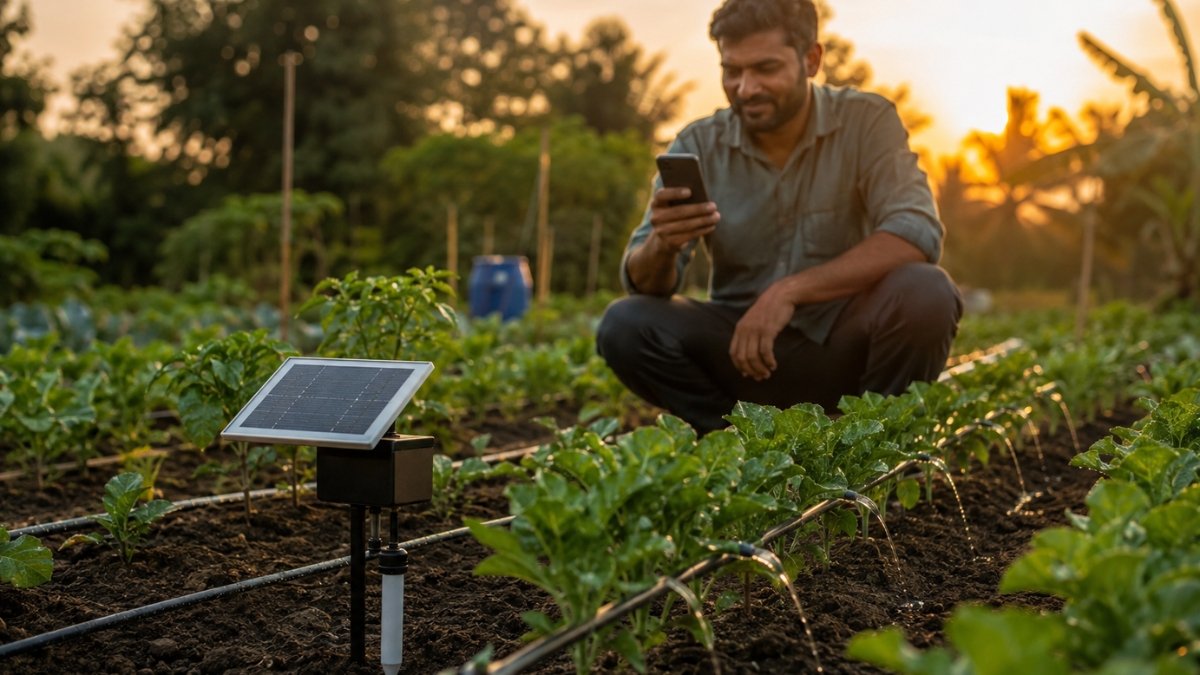
If you’ve spent any time around small farmers lately, you’ve probably heard someone mention smart irrigation. Maybe a neighbor installed soil sensors last season. Maybe you saw an ad for an app that promises to water your crops “automatically, at the perfect time.” And maybe, like a lot of people running a small operation, your first reaction was somewhere between curiosity and skepticism.
That skepticism makes sense. Small farms don’t have the budget to gamble on shiny tech that sounds good in a sales pitch but falls apart in the field. So let’s cut through the noise and actually look at what smart irrigation is, what it costs, what it saves, and whether it makes sense for an operation your size.
What “Smart Irrigation” Actually Means
At its core, smart irrigation is a system that uses data rather than guesswork to decide when and how much to water. Instead of running the sprinklers every Tuesday and Friday because that’s what your dad did, the system checks soil moisture, weather forecasts, evapotranspiration rates, and sometimes even plant stress indicators, then adjusts watering accordingly.
Some setups are dead simple: a soil moisture sensor connected to a timer that shuts off irrigation once the ground has enough water. Others are more elaborate, combining weather stations, drip lines, and a phone app that lets you control zones from wherever you happen to be standing (or sitting, coffee in hand, nowhere near the field).
The point isn’t the gadgets. The point is watering based on what the crop actually needs, not on habit.
The Case for Investing
Water savings are real, not marketing fluff. Most studies and farmer reports put water savings from smart irrigation somewhere between 20% and 50%, depending on the crop, the climate, and how inefficient the old system was to begin with. If you’re in a region where water is metered, rationed, or just plain expensive, that adds up fast.
You stop guessing. Overwatering is one of the sneakiest ways small farms lose money. It doesn’t just waste water; it leaches nutrients out of the soil, encourages root disease, and can actually reduce yields. A system that tells you the soil is already at field capacity saves you from dumping more water (and more of your fertilizer investment) down the drain, literally.
Labor gets lighter. If you’re a one- or two-person operation, walking the fields every morning to check soil by hand or manually opening and closing valves eats into hours you don’t have. Automating that frees you up for the parts of farming that actually need a human: scouting for pests, managing harvest timing, running the business side.
Yields often go up, not just water usage down. Consistent, right-sized watering reduces plant stress. Less stress generally means healthier plants and steadier yields, especially in water-sensitive crops like tomatoes, peppers, and berries.
The Case for Hesitating
Here’s where I’ll be straight with you: smart irrigation isn’t free, and it isn’t instant.
Upfront cost varies wildly. A basic soil-sensor-plus-timer setup for a small plot might run a few hundred dollars. A more complete system with multiple zones, weather integration, and drip infrastructure can run into the thousands. If your farm is under a few acres, that cost needs to be weighed carefully against what you’ll actually save.
Connectivity and power can be a headache. Rural areas don’t always have reliable cell signal or Wi-Fi, and some systems lean hard on connectivity to function well. If your fields are in a dead zone, you may need to invest in a gateway or hotspot just to make the system talk to your phone.
There’s a learning curve. Even simple systems require some setup and calibration. Sensors placed in the wrong spot give bad data, and bad data leads to bad watering decisions, sometimes worse than just watering on a schedule.
Maintenance is ongoing. Sensors get knocked around by equipment, chewed by rodents, or buried under mulch. Batteries die. Software needs updates. It’s not “set it and forget it” the way some marketing suggests.
So, Is It Worth It?
Honestly, it depends on three things: your crop, your water costs, and your current level of inefficiency.
If you’re growing high-value, water-sensitive crops- think vegetables, fruit, or anything you’re selling at a premium- the return on investment tends to come faster because both water savings and yield improvements matter more to your bottom line.
If your water is cheap or plentiful and you’re already pretty disciplined about watering schedules based on experience, the gains from smart irrigation might be smaller and slower to show up.
If you’re farming in a drought-prone region, or your water bill has been climbing, the math tends to favor making the switch sooner rather than later.
A reasonable way to test the waters, so to speak, is to start small. Install sensors in your highest-value or most problematic field first. Track your water use and yields for a season before and after. Let the numbers, not the sales pitch, tell you whether to expand.
A Few Practical Tips If You Decide to Try It
- Start with one zone or crop, not your whole farm, so you can learn the system without high stakes.
- Choose a system with an intuitive app; you’re a farmer, not an IT technician.
- Ask about offline functionality in case your connectivity is spotty.
- Factor in the cost of sensor maintenance and replacement, not just the initial purchase.
- Talk to other small farmers in your area who’ve already made the switch. Real feedback beats a product brochure every time.
The Bottom Line
Smart irrigation isn’t a magic fix, and it isn’t right for every small farm on day one. But for a lot of growers, especially those dealing with water costs, labor shortages, or inconsistent yields, it pays for itself faster than expected, often within a season or two, once water savings and reduced crop loss are factored in.
The real question isn’t whether the technology works. It does. The question is whether your specific farm, your specific crops, and your specific water situation make the investment worthwhile right now. Start small, track your results, and let your own field tell you the answer.