Author: Evolve

  • Summer vs. Monsoon: A Season-by-Season Guide to Protecting Your Home’s Water and Power Systems

    Summer vs. Monsoon: A Season-by-Season Guide to Protecting Your Home’s Water and Power Systems

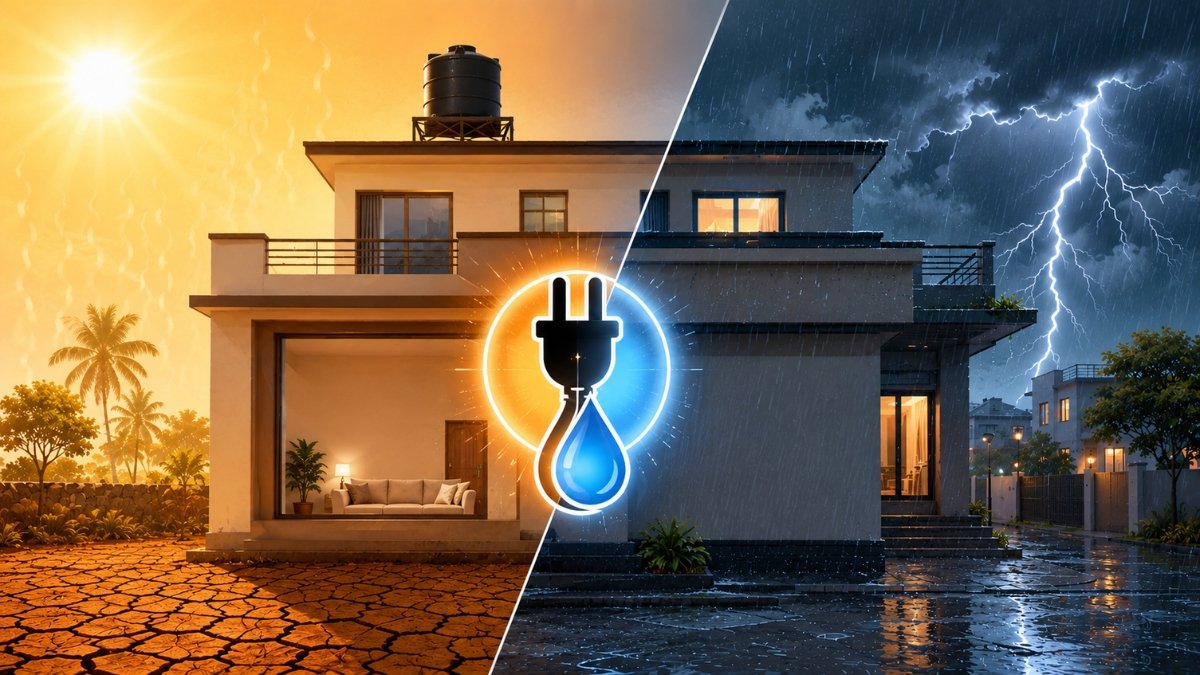
    If you’ve lived through a few Indian summers and monsoons, you already know that these two seasons throw completely different problems at your home. Summer bakes your appliances and drains your water sources dry. Monsoon floods your surge circuits with humidity, power fluctuations, and the occasional lightning-triggered spike that fries a gadget in a split second.

    Most homeowners react to these problems after they happen, after the inverter battery dies in May, or after the mixer grinder stops working following a thunderstorm in July. But with a little planning and the right water and power management solutions, you can actually get ahead of both seasons instead of constantly repairing the damage they leave behind.

    Here’s a practical, season-by-season look at what each one does to your home systems, and how to protect yourself before the weather forces your hand.

    Why Summer and Monsoon Attack Your Home So Differently

    It helps to understand what’s actually going wrong before you try to fix it.

    Summer stress is mostly about heat and scarcity. Water tables drop, motors overheat, and electrical systems work overtime to keep fans, coolers, and ACs running non-stop. The strain isn’t sudden; it builds up gradually over weeks, wearing down components that were already close to their limit.

    Monsoon stress is the opposite. It’s sudden, unpredictable, and often violent. Voltage fluctuations from grid instability, water seepage into wiring, and power surges from lightning strikes can damage expensive appliances in seconds. Where summer wears things down slowly, monsoon can knock them out instantly.

    That’s why a single, generic approach to home protection doesn’t really work. You need a strategy that adapts to what’s actually threatening your systems at that time of year.

    Summer: Managing Heat, Water Scarcity, and Overworked Systems

    The Water Problem

    Summer in most parts of India means one thing for water systems: everything runs harder for less. Borewells strain, municipal supply becomes irregular, and storage tanks that were fine all winter suddenly can’t keep up with daily demand.

    This is where good water management solutions actually save you money and stress. A few things worth doing before peak summer hits:

    • Get your storage tanks cleaned and inspected. Sediment buildup over the year reduces effective storage capacity right when you need every liter.
    • Check pump motors for wear. Motors working against lower water tables draw more current and heat up faster, a leading cause of summer motor burnouts.
    • Consider a water level controller. These prevent your pump from running dry, which is one of the fastest ways to damage a motor during scarcity months.
    • Fix leaks now, not later. A slow leak that’s tolerable in monsoon becomes a real loss when water is scarce.

    The Power Problem

    Summer power problems come from continuous appliance use. ACs, coolers, refrigerators, and fans run for hours without breaks, and that constant load raises the risk of overheating, voltage instability, and appliance wear.

    This is exactly the scenario a good appliance protection plug is built for. Unlike a basic extension board, a proper protection plug monitors voltage and current continuously, cutting off power the moment it detects something abnormal, before your compressor or motor takes the hit. If you’re running expensive appliances like ACs, refrigerators, or washing machines for extended hours, pairing them with dedicated protection is a small investment against a very expensive repair.

    Monsoon: Managing Moisture, Surges, and Unpredictable Power

    The Power Problem

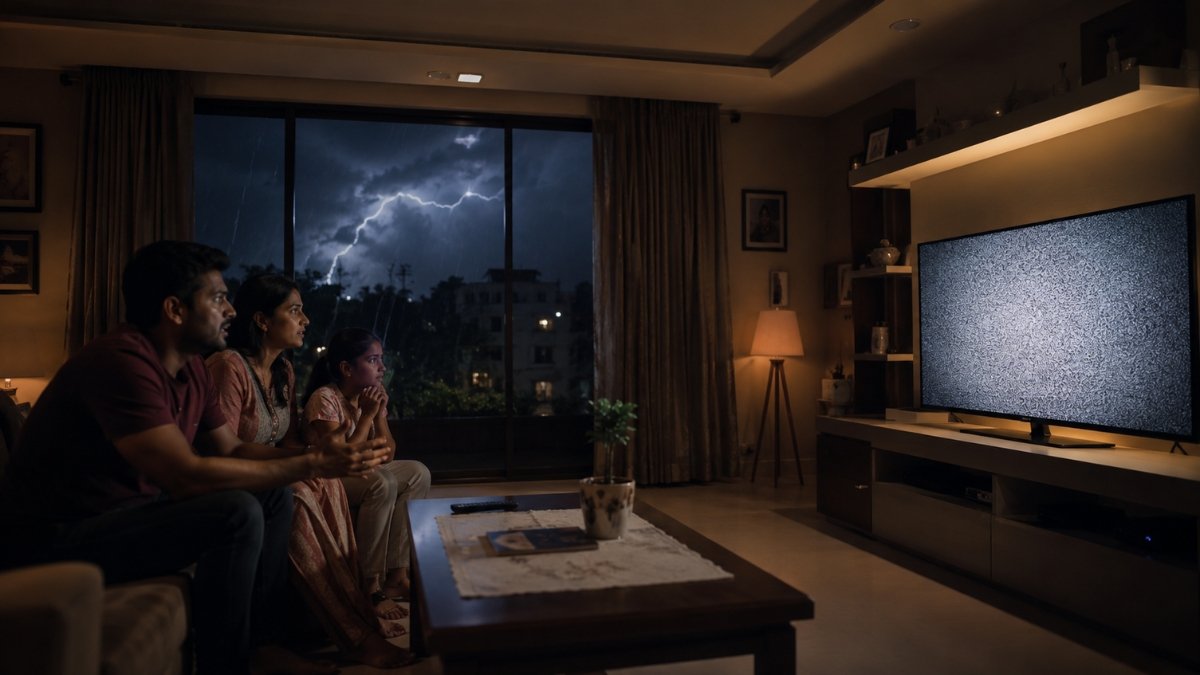
    This is where monsoon does the most damage, and where most households are underprepared. Thunderstorms cause voltage spikes. Grid instability during heavy rain causes fluctuations. And a single lightning-adjacent surge can travel through your wiring and take out a TV, router, refrigerator, or computer in an instant, often without warning.

    This is precisely why surge protection matters so much more in monsoon than any other season. A dedicated power protection plug acts as the first line of defense, absorbing sudden voltage spikes before they reach your appliance. For higher-value electronics, computers, entertainment systems, and kitchen appliances, this isn’t an optional accessory; it’s basic insurance.

    A few monsoon power habits worth building:

    • Unplug non-essential appliances during active thunderstorms, even with surge protection in place.
    • Use protection plugs on every major appliance, not just your most expensive one; smaller appliances fail just as often.
    • Get your earthing checked annually. Poor earthing is one of the most common reasons surge protection doesn’t perform as expected.
    • Watch for flickering lights or appliance resets, early signs of grid instability that suggest it’s time to inspect your setup.

    Building a Year-Round System, Not a Seasonal Panic Response

    The real shift in mindset here is moving from reactive fixes to a home protection system that works across both seasons. That means:

    1. Auditing your home twice a year, once before summer, once before monsoon, checking water systems, wiring, and appliance connections.
    2. Investing in decent protection hardware once, rather than replacing burned-out appliances repeatedly. A quality appliance protection plug or power protection plug typically costs a fraction of what a single damaged appliance would cost to repair or replace.
    3. Treating water and power together, not separately. Many monsoon electrical failures actually start with water seepage, and many summer motor failures start with electrical strain; the two systems are more connected than most people assume.
    4. Document what breaks each year. If the same appliance or pipe fails every season, that’s a sign of a deeper issue worth fixing permanently rather than patching repeatedly.

    The Bottom Line

    Summer and monsoon aren’t just different weather; they’re different sets of risks to the same home systems. Summer tests your water supply and pushes your appliances to their thermal limits. Monsoon tests your wiring, your drainage, and your ability to handle sudden, unpredictable power events.

    The homes that come out of both seasons undamaged aren’t lucky; they’re prepared. A little seasonal maintenance, combined with reliable surge protection and sensible water management solutions, is usually all it takes to turn “another summer of appliance failures” or “another monsoon power surge disaster” into a complete non-event.

    Your home’s water and power systems work hard all year. Giving them the right protection at the right time is one of the simplest ways to ensure they keep working season after season.

  • Keep Your AC Safe This Monsoon with a Smart Plug (No Stabilizer Required)

    Keep Your AC Safe This Monsoon with a Smart Plug (No Stabilizer Required)

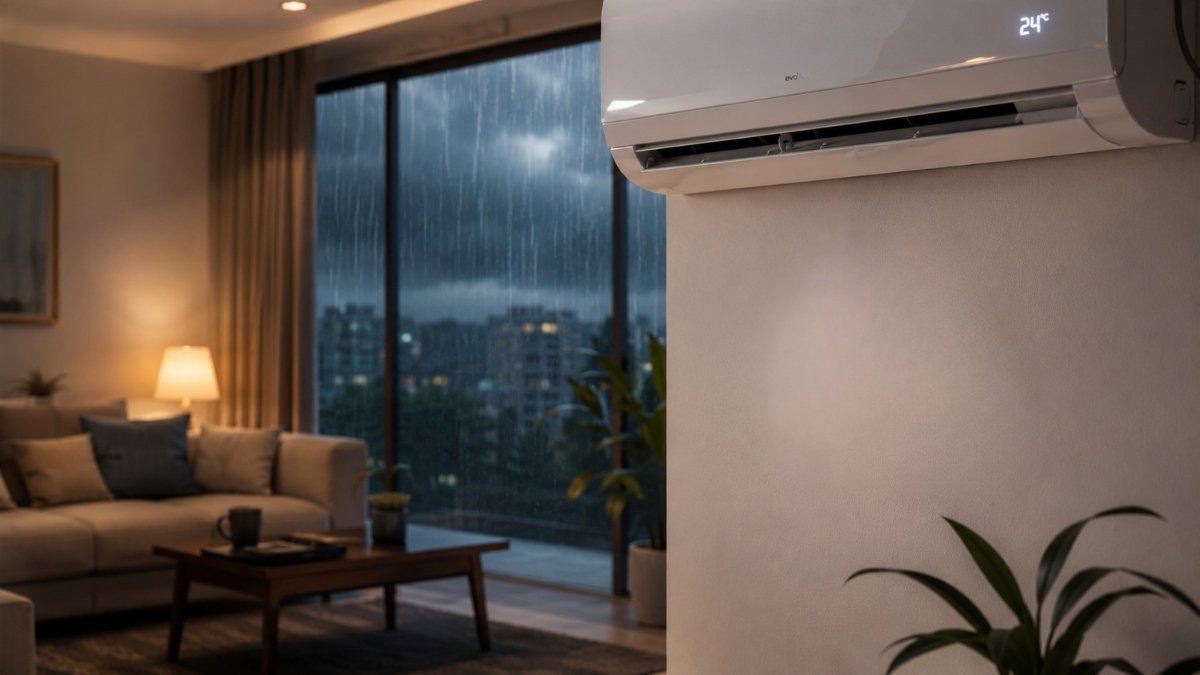
    Monsoon season brings relief from the summer heat, but it also brings one of the toughest stretches of the year for your home’s electrical system. Between heavy rain, waterlogged transformers, tripping grids, and the constant on-and-off of power during storms, the electricity supply during monsoon is often at its most unpredictable. And right in the middle of all that instability sits your air conditioner, an appliance that’s expensive to fix and even more expensive to replace if the wrong kind of power reaches it at the wrong moment.

    A lot of people assume the AC is safe once summer ends and it isn’t running as often. In reality, monsoon is arguably riskier for your AC’s electronics than peak summer, simply because the power supply itself becomes so erratic. Here’s why that happens, and how a compact smart plug can quietly take care of the problem without you needing to install a stabilizer.

    Why Monsoon Is Rough on Power Supply

    Rain and electrical infrastructure don’t mix well. Waterlogging near transformers and substations, lightning strikes, wind damage to overhead lines, and repeated short outages followed by sudden restoration all contribute to a power supply that swings unpredictably during the rainy months. It’s common in many parts of India to see the lights flicker, go out, and come back within seconds, sometimes several times in an evening.

    For most appliances, that kind of instability is a minor annoyance. For an air conditioner, it’s genuinely dangerous. When power is cut and then restored abruptly, especially during a storm, it often comes back with a voltage spike or surge that’s far higher than normal. If your AC happens to be running or set to auto-restart at that exact moment, that surge goes straight into the compressor’s control board and capacitor. Repeated exposure to this kind of event is one of the more common, and completely preventable, reasons ACs develop electrical faults that seem to “come out of nowhere.”

    There’s also the issue of low or sagging voltage, which shows up often when the grid is under strain from storm damage or heavy simultaneous load. Running a compressor motor on low voltage forces it to draw more current to compensate, generating heat inside the motor windings over time. It’s a slower kind of damage than a surge, but it adds up across a monsoon season of unstable supply.

    Why a Stabilizer Isn’t Always the Right Answer

    Stabilizers have traditionally been the go-to fix for this exact problem, and they do work, but they were designed for a different kind of issue: gradual, sustained voltage drift, not the sudden on-off surge pattern that monsoon storms tend to produce. A stabilizer takes a moment to sense and correct voltage, and that reaction window can be too slow for a sharp spike that hits the instant power is restored. On top of that, stabilizers are bulky, need dedicated space near the AC unit, and require their own wiring, not exactly convenient if you’re trying to protect an appliance quickly before the next storm rolls in.

    A Smart Plug Takes a Different, Faster Approach

    Instead of trying to smooth out the voltage the way a stabilizer does, a smart appliance protection plug works by constantly watching the power line and simply cutting the connection the moment it detects a dangerous condition, whether that’s a spike, a surge, low voltage, or overload. Nothing reaches the appliance until the power is confirmed safe again. It’s a plug-and-play device, so there’s no installation to plan around: you connect it to the wall socket, connect your AC to it, and it starts monitoring immediately.

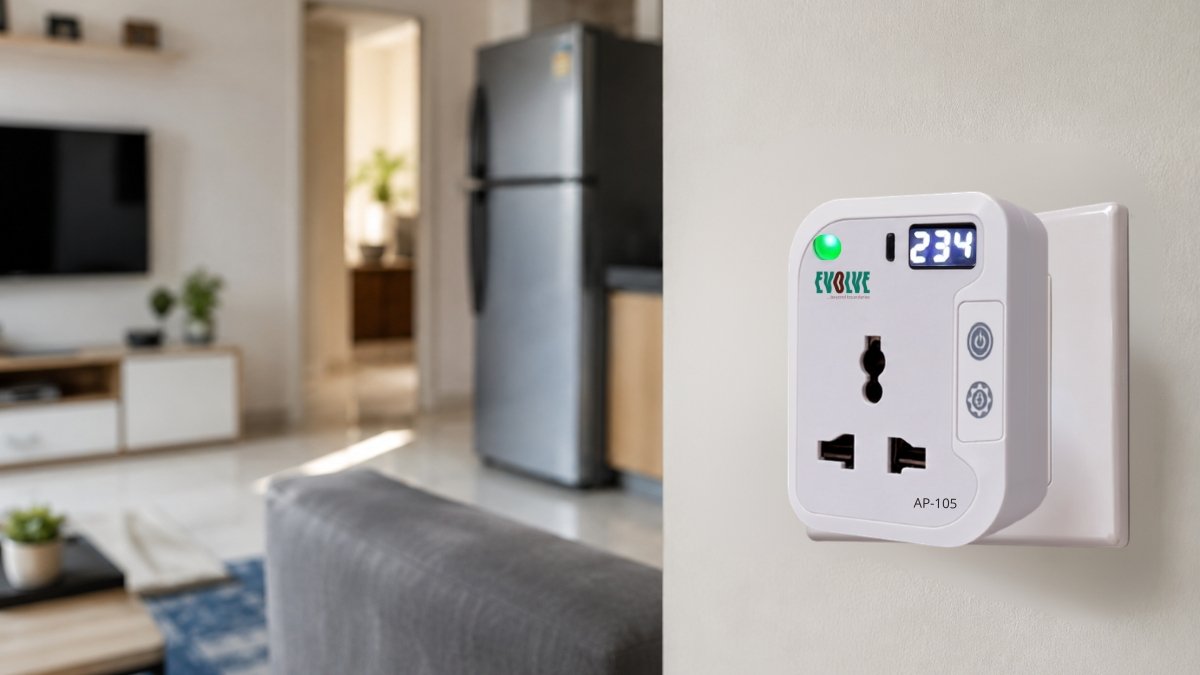
    This is the exact idea behind the Evolve AP 105 Appliance Protection Plug, a compact protection device built to sit between your AC and the wall outlet and act as a safety layer against exactly the kind of unstable power that monsoon season throws at your home.

    What the AP 105 Brings to the Table

    The AP 105 is built to handle a wide voltage range of 110V to 600V, which covers both the low-voltage sag and the high-voltage spike scenarios that show up during storms and outages. It supports up to 1.6 kW of load at 6 Amps, enough for most residential split and window AC units, and features a universal socket with BS 546 Type D pin support so it fits a wide range of plug types without extra adapters.

    A few features are particularly relevant during monsoon:

    • Instant cutoff in unsafe conditions rather than trying to correct voltage; it simply disconnects your AC the moment conditions turn risky, then restores power only once things are stable.
    • Clear LED status indicators: you can tell at a glance whether the connected appliance is protected, powered, or currently cut off due to a fault.
    • Built-in voltage and current display: useful during a storm to actually see what’s happening on your line instead of guessing.
    • Weather-tolerant build: rated for -5°C to 50°C and humidity resistance up to 50% at 40°C, which matters given how much moisture is in the air during monsoon.
    • No installation, no wiring: a genuinely useful trait when you want protection in place before the next spell of bad weather, not after.

    Real usage from customers reflects this kind of behavior well. One reviewer described the plug detecting a sudden voltage spike at home and switching to a warning indicator instead of letting it through to the connected device. Another shared how, during repeated power fluctuations, the plug kept their equipment powered off until voltage stabilized, only restoring it once it was safe, avoiding the rapid power-cycling that tends to happen during storm-related outages and is particularly hard on compressor-driven appliances like ACs.

    Wrapping Up

    Monsoon doesn’t have to mean crossing your fingers every time the power flickers. Rather than investing in a bulky stabilizer that reacts slowly to the sudden surge-and-drop pattern typical of storm season, a compact smart plug offers a faster, simpler layer of protection that’s ready in minutes. The Evolve AP 105 is built specifically for this kind of scenario, giving your AC a dependable safety net through the unpredictable months ahead, without asking you to rearrange your home to fit it in.

  • Before You Leave for Vacation, Water and Power Safety Checklist for Indian Homes

    Before You Leave for Vacation, Water and Power Safety Checklist for Indian Homes

    There’s a specific kind of dread that hits somewhere between the airport and your holiday destination.

    You’ve settled into your seat. The flight’s about to take off. And then the thought arrives: Did I switch off the pump?

    Most Indian homeowners have lived some version of this. The vacation starts well, but the anxiety doesn’t. And it almost always comes from the same two places: water and power. The pump that might run dry. The overhead tank that might overflow. The refrigerator sitting unprotected through an overnight voltage spike while no one is home to notice.

    The good news is that most of these worries are completely solvable before you leave, not by calling a neighbour every few hours, but by having the right Smart Water and Power Management Solutions in place. Systems that handle your home while you’re away, without needing you to be there.

    Water Safety, Before You Lock the Door

    1. Switch Your Pump to Automatic Mode

    If your home has a Water Level Controller, confirm it’s set to Auto before you leave. This ensures the pump runs only when the overhead tank needs filling and stops the moment it’s full. No overflow. No unnecessary pump cycles. No one needs to touch anything while you’re gone.

    If you’re still switching the pump manually, a vacation is one of the strongest reasons to upgrade to an Automatic Pump Control System before your next trip.

    1. Confirm Dry Run Protection Is Active

    Before leaving, do a quick check, run the pump briefly, and confirm the controller responds correctly to sensor inputs. A motor running without water for even a few minutes can suffer irreversible winding damage. Built-in Dry Run Protection cuts the pump the moment the sump empties, protecting your motor until water returns, completely automatically, with no one home.

    1. Close All Taps and the Main Stop Cock

    Walk through every bathroom, the kitchen, and the utility area. Confirm every tap is fully closed. If your home has an inline stop cock for the main supply, turn it off completely. This isolates your internal plumbing from the external supply, eliminating any risk from a dripping tap or a partially open valve over ten days.

    1. Check for Existing Pipe Leaks

    A pipe joint seeping slowly for weeks becomes a real problem over a long absence. Press a dry cloth against each joint under sinks, behind the washing machine, and near the water heater connections. Any moisture shows up immediately. Fix what you find before you leave; what’s a minor inconvenience today is a flooded utility room by the time you’re back.

    1. Switch Off and Drain the Geyser

    Switch the geyser off at the main wall switch, not just the thermostat. For a trip longer than a few days, drain it if possible. A drained, switched-off geyser creates zero risk. One left on for ten days creates several.

    Power Safety, What Needs Attention Before You Go

    1. Unplug Everything Non-Essential

    The most straightforward Power Protection step is to unplug what doesn’t need to be running. Televisions, computers, set-top boxes, gaming consoles, decorative lighting, all can be unplugged completely. An appliance that’s physically disconnected cannot be damaged by a surge, a spike, or a voltage event. For non-essential electronics, this is the most complete protection available.

    1. Protect the Appliances That Must Stay On

    The refrigerator, router, and security cameras need to remain powered. These appliances need Power Protection more than ever when you’re not home, because there’s no one to notice if something goes wrong.

    A quality Surge Protection device inline between the wall socket and each of these appliances intercepts voltage spikes before they reach internal circuits. A device with high and low voltage protection goes further, disconnecting the appliance if supply voltage drifts outside safe limits and reconnecting automatically when it stabilises. For the refrigerator specifically, look for a protector with a restart delay, it holds the compressor offline for a few minutes after power restoration, protecting it from starting under unstable post-outage conditions.

    1. Check Panel-Level Surge Protection

    If your home has a whole-house Surge Protection device at the distribution board, check that its status indicator is showing correctly before you leave. Panel-level surge devices have a finite absorption capacity, after a significant event, some types need replacement. If you don’t remember the last time it was checked, now is the right time.

    1. Switch Off All Heavy Appliances at the Wall

    Air conditioners, geysers, microwaves, electric kettles, all off at the wall switch, not just the remote or button. Appliances in standby draw power and remain exposed to Power Protection failures. This one step eliminates risk for everything that doesn’t need to run.

    1. Protect Your EV Charger Point

    If your EV charging point remains active while you’re away, it’s exposed to the full range of Power Protection risks, surges from storm-related grid events, overvoltage on power restoration, and earth leakage from wet conditions. A dedicated EV protector handles all of these automatically, with no intervention required. It’s one of the most overlooked Smart Water and Power Management Solutions for homes with EV charging infrastructure.

    The At-a-Glance Checklist

    Water

    • Pump set to Auto mode, Automatic Pump Control System active
    • Dry Run Protection confirmed working
    • All taps closed, main stop cock off
    • Pipe joints checked for leaks
    • Geyser switched off at wall, drained

    Power

    • All non-essential appliances unplugged
    • Fridge, router, cameras protected with Surge Protection device
    • Fridge protector has restart delay active
    • Panel Surge Protection status confirmed
    • AC, geyser, heavy appliances off at wall
    • EV charger point protected with dedicated Power Protection

    Leave with Nothing Unresolved

    A ten-day absence in India’s power and water environment is a long time for things to go wrong unnoticed. Monsoon storms bring voltage surges every night. Summer drops borewell levels. Post-outage grid restoration sends spikes through every connected appliance.

    None of these are unusual. All of them are preventable, with the right Water Management Protection and Power Protection in place, and a thorough check before you step out.

    Do this once properly, and it becomes a ten-minute habit before every trip. One that lets you actually enjoy your vacation, without the mid-flight dread.

  • What Is a 3 Phase Voltage Protector and Why Does Your Farm or Factory Need One?

    What Is a 3 Phase Voltage Protector and Why Does Your Farm or Factory Need One?

    If you’ve ever watched a borewell motor burn out overnight or seen a factory compressor trip for no obvious reason, there’s a good chance the real culprit wasn’t the machine at all. It was the power feeding it.

    Anyone running a farm, a workshop, or a small factory in India knows the electricity supply isn’t always well-behaved. Voltage climbs, dips, one phase goes missing, and the equipment on the other end just has to take it. Most of the time it survives. Sometimes it doesn’t, and that’s when a repair bill or a replacement motor shows up out of nowhere.

    This is exactly the gap a 3-phase voltage protector is built to close.

    What a 3 Phase Voltage Protector Actually Does

    A 3-phase voltage protector sits between your incoming power supply and your equipment, and it does one job continuously: it watches all three phases at once. It cuts power the moment something goes outside safe limits.

    That “something” usually falls into a few categories:

    • Over-voltage or under-voltage – when the supply climbs too high or sags too low for the connected load
    • Phase failure – one of the three phases drops out completely, which is one of the fastest ways to burn a motor winding
    • Phase reversal – the sequence of phases gets swapped, which can make three-phase motors spin the wrong way
    • Voltage imbalance – the three phases aren’t equal, which puts uneven stress on windings

    The moment the device detects any of these faults, it disconnects the load. Once the supply stabilizes, most modern units restore power automatically after a set delay, so you’re not stuck manually resetting a switch at 2 AM.

    In short, it’s a dedicated layer of power protection sitting quietly in the background, doing nothing when everything is fine, and doing everything when it isn’t.

    Why This Matters More on Farms and in Factories

    Homes deal with single-phase issues. Farms and factories deal with something bigger.

    Agricultural pump sets, industrial motors, compressors, and CNC equipment almost always run on three-phase supply, and three-phase equipment is far less forgiving of an unbalanced or missing phase than a single-phase appliance is. A motor that loses one phase while running doesn’t just stop; it tries to keep going on the remaining two, drawing excess current and overheating in the process. By the time someone notices the smell or the smoke, the winding damage is already done.

    Add to this the reality of rural and semi-urban power supply in India: agricultural feeders with irregular voltage, load shedding, transformer switching, and long feeder lines that cause voltage drops at the far end. Factories on industrial feeders aren’t immune either; heavy machinery switching on and off nearby can cause voltage sags and surges that ripple through the whole line.

    A farm that loses a borewell motor mid-season isn’t just facing a repair cost. It’s facing a delayed irrigation cycle, and depending on the crop, that can mean real yield loss. A factory that loses a motor or a control panel isn’t just facing downtime; it’s facing missed production targets and, in some cases, safety risks from overheated equipment.

    Appliance Protection Isn’t Just a Home Concept

    People often think of appliance protection as something for a refrigerator or a washing machine. On a farm or in a factory, “appliances” scale up considerably; pump sets, starters, control panels, chillers, packaging lines, and processing equipment all qualify. Every one of them has windings, capacitors, or electronic controls that are sensitive to bad voltage in exactly the same way a home appliance is, just with a bigger price tag attached if something fails.

    This is really the core idea behind proper power protection: it doesn’t matter whether the load is a mixer grinder or a 10 HP motor, the principle is identical. Keep the voltage within safe limits, and the equipment lasts the way it’s supposed to.

    Where a Surge Protector Fits Into the Picture

    A voltage protector and a surge protector solve related but different problems, and it’s worth knowing the difference.

    • A voltage protector deals with sustained conditions, voltage that stays too high, too low, or unbalanced for seconds, minutes, or longer.
    • A surge protector deals with sudden spikes, the kind caused by lightning strikes, grid switching, or nearby heavy equipment kicking on, where voltage jumps for a fraction of a second but with enough force to damage sensitive components instantly.

    A well-protected farm or factory setup usually needs both layers working together: surge protection to absorb the sudden spikes, and voltage protection to handle the ongoing fluctuations and phase faults that a surge device isn’t designed to catch.

    Building a Proper Water and Power Management Solution

    For agricultural setups especially, power protection rarely stands alone; it’s tied directly to water management. A pump that trips because of a phase fault is also a pump that isn’t irrigating the field on schedule. This is why the more effective approach is to think in terms of water and power management solutions rather than treating voltage protection as a standalone box bolted onto a motor.

    A connected setup, where pump control, water-level sensing, and voltage protection work together, means less manual intervention, fewer dry-run failures, and equipment protected from both electrical and operational faults.

    What to Look for in a 3 Phase Voltage Protector

    If you’re evaluating one for your farm or factory, a few things are worth checking:

    1. Adjustable voltage thresholds so it matches the actual tolerance of your equipment, not a generic default
    2. Phase failure and reversal protection, not just over/under voltage
    3. Auto reconnect with a configurable delay, so equipment doesn’t restart the instant power returns (which can itself cause damage)
    4. Current rating suited to your load; a protector sized for a small motor won’t hold up under an industrial compressor
    5. Reliable build quality, since the device is meant to be the last line of defense, it needs to outlast the equipment it’s protecting

    The Bottom Line

    Voltage problems don’t announce themselves. They show up as a burnt motor, a damaged control panel, or an unexplained factory shutdown, and by then the damage is already done. A 3-phase voltage protector is one of those additions that costs far less than the equipment it’s guarding, and it’s the kind of investment that only proves its worth the day it actually trips and saves something expensive from failing.

    Whether you’re running a single borewell pump or a full production line, pairing solid power protection with the right surge protector coverage is one of the simplest ways to stop bad power from becoming an expensive problem.

  • What Is a Smart Plug and Do You Really Need One for Your Home?

    What Is a Smart Plug and Do You Really Need One for Your Home?

    Walk into any electronics store or scroll through a shopping app today, and you’ll spot them everywhere: small, boxy devices that sit between your wall socket and your appliance, promising to make your home “smarter.” They’re called smart plugs, and they’ve quietly become one of the most talked-about additions to modern Indian households. But what exactly do they do, and is it worth spending money on one? Let’s break it down in plain, simple terms.

    What Is a Smart Plug, Exactly?

    A smart plug is a small adapter that you plug directly into your existing wall socket. Your appliance, a TV, refrigerator, fan, or computer, then plugs into the smart plug instead of the wall. On the surface, it looks like a basic extension, but it does a lot more work behind the scenes.

    Depending on the type you buy, a smart plug can do things like turn appliances on or off remotely, monitor how much electricity a device is consuming, or, in the case of protection-focused plugs like the Evolve AP 105, actively guard your appliances against unstable power conditions. Not every smart plug is built for the same purpose, and that’s an important distinction most people miss when they go shopping for one.

    Two Kinds of “Smart” Plugs

    Broadly speaking, there are two categories of smart plugs available in the market:

    1. Connectivity-based smart plugs: These connect to your Wi-Fi and let you control appliances through an app or voice assistant. Great for convenience, but they usually don’t do much to protect your devices from electrical damage.
    2. Protection-based smart plugs: These focus on keeping your appliances safe from India’s often unpredictable power supply. They monitor voltage in real time and cut off power automatically when something goes wrong, before it reaches your appliance.

    If your main concern is convenience, the first type suits you. But if you’ve ever lost a TV, fridge, or computer to a sudden power surge, the second type is where the real value lies, and that’s exactly the space Evolve’s AP 105 has been designed for.

    Why Power Protection Matters More Than People Realise

    Most Indian homes deal with some degree of voltage fluctuation, especially during monsoons, peak summer load, or in areas with older electrical infrastructure. A sudden spike or dip in voltage doesn’t always trip a breaker; sometimes it just quietly damages the internal circuitry of your appliance over time. This is where the idea of power protection becomes genuinely important, not optional.

    Appliances like refrigerators, air coolers, TVs, and computers contain sensitive electronic components that simply aren’t built to handle irregular voltage. A single bad spike can shorten their lifespan or cause an expensive repair. This is precisely the gap that products like the Evolve AP 105 – Appliance Protection Plug are built to close.

    Meet the Evolve AP 105: A Smart Plug Built for Protection

    The Evolve AP 105 Appliance Protection Plug is a compact, plug-and-play device that sits between your appliance and the wall socket, continuously monitoring the power flowing through it. Unlike plugs that only offer app-based convenience, the AP 105 is purpose-built around one goal: keeping your appliances safe.

    Here’s what makes it stand out:

    • Complete power protection against over-voltage, under-voltage, and irregular power conditions
    • Surge protection that shields sensitive electronics from sudden spikes and disturbances
    • A wide voltage tolerance range of 110V to 600V, built for real-world Indian power conditions
    • Clear LED indicators so you always know the status of your connected appliance
    • A universal socket design that works with a wide range of plug types
    • No installation required, simply plug it in and connect your device
    • Durable ABS build with wide temperature and humidity tolerance, suitable for home, office, or even travel use

    Customer reviews on the product page reflect exactly this; users have reported the device stepping in during real voltage spikes and overload situations, cutting power before it could reach and damage their TVs, computers, and air coolers.

    So, Do You Really Need One?

    Here’s the honest answer: not every home needs a smart plug for convenience, but almost every home benefits from some form of power protection. If you live in an area prone to voltage fluctuations, run expensive electronics like refrigerators or computers, or simply want peace of mind when you’re away from home, an appliance protection plug is a small investment that can save you from a much larger repair or replacement bill down the line.

    Think of it this way: a smart plug that only lets you switch a light on from your phone is a nice convenience. A smart plug that actively prevents your refrigerator from getting fried during a power spike is a safeguard for your household budget.

    The Bigger Picture: Smart Homes Need Smart Protection

    As more Indian homes move toward automation and connected devices, the conversation is slowly shifting from just “smart” to “smart and safe.” This is part of a larger movement toward smart water and power management solutions, where every appliance, pump, and electronic device in a home is monitored and protected intelligently, rather than left exposed to unpredictable power and water conditions. Evolve, as a brand, builds its entire product range, from voltage regulators to pump controllers, around this exact philosophy.

    Final Thoughts

    A smart plug isn’t just a trendy gadget; depending on the kind you choose, it can be a genuine safety net for your home’s electronics. If your priority is remote control and convenience, a basic Wi-Fi smart plug will do. But if your real concern is protecting your appliances from India’s unpredictable power supply, a dedicated appliance protection plug like the Evolve AP 105 offers something far more valuable: reliable surge protection and long-term peace of mind.

    At the end of the day, the question isn’t just “do you need a smart plug?”, it’s “can you afford not to protect the appliances you’ve already invested in?” For most Indian homes today, the answer is a simple one.

  • How to Stop Wasting Water Every Morning: A Practical Guide to Automatic Tank Management

    How to Stop Wasting Water Every Morning: A Practical Guide to Automatic Tank Management

    Every morning, somewhere in India, someone climbs a flight of stairs to check if the overhead tank is full.

    Sometimes it’s already overflowing, water running down the wall, the sound of it hitting the terrace floor. Sometimes it’s bone dry because the pump ran out of water in the sump and no one noticed. And sometimes the pump is still running, has been running for an hour, and the tank isn’t filling because the sump emptied twenty minutes ago and now the motor is quietly burning out.

    This is the daily reality of manual water management in Indian homes. And it’s not a minor inconvenience. Overflowing tanks waste thousands of litres of water every month. Dry run events shorten pump motor life by years. The physical routine of monitoring, switching, and checking adds up to real time and real stress, every single day.

    There’s a better way. And it doesn’t require an electrician, a plumber, or any complicated installation.

    Why Manual Tank Management Always Fails Eventually

    The problem with manual water management isn’t effort. Most people are diligent about it, at least at first. The problem is that it requires consistent attention to a repetitive task with zero margin for error.

    Miss the moment to switch on the pump and the family has no water for the morning. Forget to switch it off and the overhead tank overflows. Step out for an errand while the pump is running and come back to a flooded terrace. None of these are failures of intention. They’re the inevitable result of asking humans to do what automation does better: monitor a condition continuously and respond immediately when it changes.

    A proper Automatic Pump Control System removes human attention from the equation entirely. The Water Level Controller watches both tanks. The pump starts when it should and stops when it should. Nothing overflows. Nothing runs dry. And you’re free to go about your morning without thinking about water at all.

    The Two Problems Every Indian Home Faces with Water Tanks

    Before understanding the solution, it’s worth being precise about the two distinct problems automatic tank management solves.

    Problem 1, Overflow

    An overhead tank overflow happens when the pump keeps running after the tank is full. Water comes over the top, runs down the exterior wall, seeps into the building structure, stains the plaster, and eventually damages the ceiling below.

    The waste is significant; a typical 500-litre overhead tank overflowing for just 30 minutes before someone notices can waste 200 litres or more, depending on the pump flow rate. Over a month, repeated overflow events waste thousands of litres of water that your pump motor worked to deliver, water you’ve already paid for through your electricity bill.

    Problem 2: Dry Run

    A dry run happens when the sump, the underground storage tank that feeds the pump, empties while the pump is still running. The pump pulls air instead of water. The motor, which relies on water for cooling and lubrication, begins to overheat immediately.

    Without protection, a pump motor can sustain irreversible winding damage in as little as 2 to 5 minutes of dry running. This is one of the most common causes of premature pump motor failure in Indian homes, and one of the most expensive, with motor repair or replacement costs running from ₹3,000 to ₹10,000 or more depending on the motor.

    Both problems share the same root cause: no one is watching the tanks at the moment when action is needed. An Automatic Pump Control System with a built-in Water Level Controller is always watching, and always responds at exactly the right moment.

    How Automatic Tank Management Works

    The principle behind automatic tank management is straightforward.

    Sensors placed in the sump and overhead tank continuously monitor the water level in each. The Water Pump Controller reads these sensor inputs and makes decisions based on a simple logic:

    • Sump has water + Overhead tank is low → Pump switches ON
    • Overhead tank reaches full level → Pump switches OFF
    • Sump is empty → Pump stays OFF, protecting the motor from Dry Run

    This logic runs continuously, not once in the morning when you switch the pump on, but every second the system is active. The moment any condition changes, the response is immediate. The pump doesn’t wait for someone to notice. It acts.

    The result is a water management system that fills the overhead tank reliably every time, stops the moment the tank is full, and never runs the pump without water in the sump.

    Meet the Evolve AP 101–103: Automatic Tank Management Built for Indian Homes

    The Evolve AP 10x Series, available in AP-101, AP-102, and AP-103 variants, is a compact, Plug & Play Domestic Water Management System designed specifically for single-phase surface pumps used in Indian residential water setups.

    It handles everything described above: automatic start, automatic stop, overflow prevention, Dry Run Protection, in a device small enough to fit in your palm and simple enough to install without calling an electrician.

    Plug & Play Design, No Complicated Setup

    The AP 10x series is built for real homes, not engineering installations. Its Plug & Play Design means you connect it to your pump and sensors, and it’s ready to operate. No rewiring, no panel modifications, no technical expertise required. The User-Friendly Operation ensures that anyone in the household can understand the status indicators and operate the manual override if needed.

    AI-Based Optimization for Efficient Water Filling

    The AP 10x doesn’t just switch the pump on and off; it uses AI-Based Optimization to manage the filling process intelligently. This means the system adapts to your home’s specific water usage patterns, optimising the pump run cycles for efficient and controlled water filling rather than simply running at fixed intervals.

    Intelligent Dry Run Protection

    The built-in Intelligent Dry Run Protection is the feature that protects your motor. The moment the sump water drops below the safe threshold, the AP 10x cuts power to the pump immediately, before dry running can cause winding damage. When water returns to the sump, the system resumes normal operation automatically. No manual reset, no technician visit.

    This single feature, working every day without fail, can extend your pump motor’s operating life by years compared to an unprotected setup.

    Wide Voltage Operating Range, 140V to 320V

    Indian residential power supply is not a steady 230V. It fluctuates, sometimes significantly, depending on the time of day, load on the local transformer, and the quality of the distribution infrastructure in your area.

    The AP 10x operates reliably across a Wide Voltage Operating Range of 140V to 320V, which covers the real-world range of Indian residential supply without the nuisance tripping that plagues controllers with narrower operating ranges. Whether your area sees voltage sag during peak morning hours or a spike late at night, the AP 10x keeps working.

    Built-In Voltage and Current Monitoring

    Beyond water level management, the AP 10x also monitors Voltage and Current in real time, giving you visibility into what your pump is actually drawing and what your supply is actually delivering. LED Status Indicators on the device show operating status, fault conditions, and tank levels at a glance.

    Auto and Manual Control Modes

    The AP 10x gives you both Auto and Manual Control Modes. Auto mode handles everything automatically day to day. Manual mode lets you override the automation when needed, say, during maintenance or if you need to run the pump outside the normal cycle. Both modes are accessible without tools or technical knowledge.

    RTC Function, Available in AP-103

    The AP-103 model adds an RTC (Real-Time Control) function, which allows time-based scheduling of pump operation. If your area has specific hours when municipal supply is available, or if you want to limit pump operation to off-peak electricity tariff windows, the AP-103 lets you programme this directly into the device.

    Extended Pump Life Through Smart Automation

    By eliminating dry run events, preventing unnecessary pump cycling, and managing start-stop timing intelligently, the AP 10x actively reduces wear on your pump motor. Extended Pump Life through smart automation isn’t a marketing claim; it’s the direct result of a motor that never runs without water, never starts under surge conditions, and never cycles unnecessarily.

    Technical Specifications

    Specification Details
    Voltage Range 140 – 320V
    Frequency 50 Hz
    Power Up to 1 kW / 1.5 HP
    Current 10 Amps
    Dimensions 60 × 70 × 75 mm
    Weight 230 g
    Enclosure Durable ABS
    RTC Function AP-103 only
    Warranty 1 Year

    Where the AP 10x Series Works Best

    The AP 101–103 is designed for Residential Water Automation in Indian homes, specifically setups where a single-phase surface pump moves water from an underground sump to an overhead tank.

    Applications include:

    • Overhead Tank Level Control Systems, the most common domestic setup in Indian homes: sump receives municipal or borewell supply, pump fills the overhead tank
    • Inline Water Level Management, controlling flow and levels in intermediate storage points
    • Pressure Booster Systems, managing pump operation in home pressure booster setups
    • Any residential setup where Automatic Pump Control would replace manual switching

    Choosing Between AP-101, AP-102, and AP-103

    All three models are built on the same platform, with the same voltage range, current rating, Dry Run Protection, and build quality. The difference is in configuration flexibility and added features:

    AP-101, Core model. Standard sump-to-overhead tank automation with full protection. The right choice for most Indian homes with a straightforward single pump setup.

    AP-102, Flexible configuration for different water management needs. Better suited when your setup has specific requirements that the AP-101’s standard configuration doesn’t cover.

    AP-103, Everything in AP-101 plus RTC (Real-Time Control) for time-based pump scheduling. The right choice if you want to programme specific operating windows based on electricity tariffs or municipal supply hours.

    If you’re not sure which model fits your specific setup, Evolve’s expert team can advise based on your pump type, tank configuration, and water usage pattern.

    Final Thought

    The morning water routine is one of those things Indian homeowners have accepted as a daily burden, something to be managed, not eliminated. But it doesn’t have to be this way.

    An Automatic Pump Control System with a quality Water Level Controller and Intelligent Dry Run Protection turns tank management from a daily task into something that simply happens, reliably, quietly, without your attention.

    The Evolve AP 101–103 Domestic Water Management System does exactly this. Install it once. Set it up in minutes. And let every morning after that take care of itself.

  • Drip Irrigation System: How Smart Irrigation Is Changing the Way India Farms and Gardens

    Drip Irrigation System: How Smart Irrigation Is Changing the Way India Farms and Gardens

    Water is the one input in farming that has no substitute.

    You can switch fertilisers, change seeds, try a different pest control method. But without water, the right amount, at the right time, delivered to the right place, nothing grows. And yet, for decades, the dominant method of delivering that water in India has been flood irrigation: open a channel, let water run across the field, and hope enough reaches the roots before it evaporates or runs off.

    The result? India uses more water for agriculture than almost any country on earth, and still loses a significant portion of every crop cycle to water stress, either too much in one spot, or not enough in another.

    A Drip Irrigation System changes this entirely. And when you pair it with smart automation, Moisture Sensors, Automatic Solenoid Valves, and GSM Pump Controllers, it becomes one of the most powerful tools available to any farmer or serious gardener in India today.

    What Is a Drip Irrigation System?

    A Drip Irrigation System is a method of delivering water directly to the root zone of plants, slowly, precisely, and continuously, through a network of pipes, tubes, and emitters.

    Instead of flooding an entire field or spraying water overhead, a Drip Irrigation System places water exactly where the plant needs it: at the root. Evaporation is minimised. Runoff is eliminated. The soil around the root stays consistently moist, not waterlogged, not dry, which is precisely the condition most crops and plants grow best in.

    The core components of a Drip Irrigation System are straightforward:

    • Main pipeline, carries water from the source (borewell, sump, or municipal supply) to the field
    • Sub-mains and laterals distribute water across rows or zones
    • Drip emitters or drippers, release water at a controlled rate directly at each plant
    • Filter system, removes particles that would clog the emitters
    • Control point, where flow is regulated, timed, and automated

    The last component, the control point, is where the real intelligence of a modern Automatic Irrigation System lives.

    The Problem with Manual Irrigation, Even Drip

    A basic Drip Irrigation System without automation still requires someone to open and close valves, monitor soil conditions, and judge when watering is needed. In practice, this means:

    • Crops get watered on a fixed schedule regardless of actual soil moisture
    • A farmer with 10 acres has to manage multiple zones manually
    • Watering continues even after rain, wasting water and risking root rot
    • Remote fields go unwatered when access is difficult or labour is unavailable

    The solution isn’t a different irrigation method. It’s automation layered onto the Drip Irrigation System already in place.

    How Automation Makes Drip Irrigation Truly Smart

    Moisture Sensor, Water Only When the Soil Actually Needs It

    A Moisture Sensor placed in the root zone of crops measures the actual water content of the soil in real time. When moisture drops below a threshold, set based on the crop type and growth stage, the irrigation system triggers automatically. When moisture is adequate, it stays off.

    This sounds simple. The impact is significant.

    Without a Moisture Sensor, irrigation runs on time, every morning at 6 AM, regardless of whether last night’s rain already saturated the soil. With a Moisture Sensor, irrigation runs on need. Water is applied only when the crop requires it, in the quantity required, and stops automatically when the threshold is met.

    The result is less water used, lower electricity bills from running the pump less, and healthier crops that aren’t stressed by either over- or under-watering.

    For home gardens, a Moisture Sensor is equally valuable. Potted plants, kitchen gardens, and landscaped beds all benefit from moisture-based control, especially during monsoon, when manual watering schedules become completely redundant.

    Automatic Solenoid Valve, Zone by Zone Control Without Manual Intervention

    A field or garden is rarely uniform. Different crops, different soil types, different sun exposure, different growth stages- each zone has different water requirements at different times.

    An Automatic Solenoid Valve solves this. Installed at each irrigation zone, an Automatic Solenoid Valve opens and closes on command from the central controller, allowing each zone to be irrigated independently, on its own schedule and duration, without anyone physically opening or closing anything.

    For a farmer with multiple crops, say, tomatoes in one section, groundnut in another, and a border of banana, each zone can run on its own profile. The tomatoes get more frequent, shorter watering cycles. The banana gets longer, deeper watering less often. All of it happens automatically, simultaneously, with no manual switching.

    An Automatic Solenoid Valve also responds to Moisture Sensor readings. If the sensor in zone 3 reads adequate moisture, the valve for zone 3 stays closed, even if zone 1 and zone 2 are actively irrigating. True zone-level intelligence.

    Automatic Timer Switch, Schedule-Based Irrigation for Predictable Crops

    Not every application needs sensor-based control. Many farmers know their crop’s water requirements well; a fixed schedule based on crop type, season, and growth stage works reliably.

    An Automatic Timer Switch brings this schedule into the irrigation controller. Morning watering at 5:30 AM, evening at 5:00 PM, duration 45 minutes, set once and it runs automatically every day without any manual action. When the crop moves to a different growth stage, update the schedule. That’s it.

    For large farms running irrigation at night, when evaporation is lowest and electricity tariffs are often lower, an Automatic Timer Switch makes unattended overnight operation reliable and consistent.

    GSM Pump Controller, Remote Control from Anywhere

    This is where Agricultural Automation becomes genuinely transformative for Indian farmers.

    A GSM Pump Controller allows you to start, stop, and monitor your irrigation pump from anywhere in India using a simple SMS or phone call. No smartphone app required. No internet connection needed. Any mobile phone, any network, any time.

    For a farmer managing land 20 km from home, or a landowner who travels frequently, or a manager overseeing multiple farm sites, the GSM Pump Controller means the irrigation system is always reachable. Send an SMS, and the pump starts. Send another, and it stops. Get an SMS alert if the pump trips, if the borewell runs dry, or if power fails at the site.

    Combined with Automatic Solenoid Valves and Moisture Sensors, a GSM Pump Controller completes a fully remote, fully automated Automatic Irrigation System, one that manages itself, alerts you when something needs attention, and runs your irrigation schedule without requiring physical presence.

    Water Pump Controller, The Engine of the Automation System

    The Water Pump Controller sits at the centre of any serious Automatic Pump Control System. It manages the pump motor, starting it when irrigation is needed, stopping it when the cycle is complete or the source runs low, and protecting it from the faults that end motor life prematurely: Dry Run Protection, voltage faults, overload.

    For Drip Irrigation Systems specifically, the Water Pump Controller ensures the pump delivers consistent pressure to the drip lines. Pressure variation in drip systems causes inconsistent flow from emitters; some plants get too much, others too little. A well-set Water Pump Controller maintains the operating pressure the system was designed for, ensuring every emitter across every zone delivers exactly what it should.

    Drip Irrigation + Smart Automation: What a Complete Setup Looks Like

    For a medium-sized farm, say, 5 to 10 acres, a fully automated Drip Irrigation System would typically include:

    Component Function
    Drip Irrigation System Delivers water to root zone across all crop rows
    Moisture Sensor Monitors soil moisture, triggers irrigation on demand
    Automatic Solenoid Valve Controls water flow to each zone independently
    Automatic Timer Switch Schedules fixed irrigation cycles
    Water Pump Controller Manages pump operation and protects motor
    Dry Run Protection Cuts the pump if the borewell runs dry
    GSM Pump Controller Enables remote monitoring and control via mobile
    DOL Motor Starter Starts 3-phase pump motor safely

    Each component does a specific job. Together, they create an Automatic Irrigation System that runs autonomously, conserving water, protecting equipment, and delivering consistent results across every crop cycle.

    The Real-World Benefits for Indian Farmers and Gardeners

    Water savings of 30–50% compared to flood irrigation, the most cited advantage of Drip Irrigation Systems, and consistently validated in Indian agricultural trials across Tamil Nadu, Maharashtra, Karnataka, and Andhra Pradesh.

    Lower electricity bills: from running the pump less and only when the Moisture Sensor calls for it, not on fixed hours regardless of actual need.

    Higher crop yields: from consistent moisture at the root zone, reduced plant stress, and elimination of both overwatering and underwatering.

    Labour reduction: an automated Drip Irrigation System with Automatic Solenoid Valves and a GSM Pump Controller requires far less manual intervention than any manual irrigation method.

    Motor protection: Dry Run Protection and a proper Water Pump Controller protect the borewell pump from the conditions that cause the most common and expensive pump failures.

    Better crop quality: consistent moisture delivery produces more uniform fruit and vegetable size, which matters for market pricing.

    Is Drip Irrigation Only for Large Farms?

    No. And this is one of the most common misconceptions about Drip Irrigation Systems in India.

    A kitchen garden of 50 square feet benefits from drip. A terrace garden of 10 pots benefits from drip with a timer and Moisture Sensor. A small farm of 1–2 acres gains significantly from even a basic drip setup with an Automatic Solenoid Valve and timer.

    The technology scales from a single home garden bed to thousands of acres. The principles are identical at every scale: deliver water to the root, control when and how much, automate as much of the decision-making as the application warrants.

    Government Support for Drip Irrigation in India

    The Indian government’s Pradhan Mantri Krishi Sinchayee Yojana (PMKSY) and associated schemes provide subsidies of up to 55–90% for Drip Irrigation System installation for small and marginal farmers across most states. Tamil Nadu, Maharashtra, Gujarat, Karnataka, and Rajasthan all have active subsidy programs that significantly reduce the upfront cost.

    For any farmer considering a Drip Irrigation System, checking the applicable state-level subsidy before purchasing equipment is an important first step. The installed cost after subsidy is often a fraction of the market price.

    Final Thought

    India’s water challenge in agriculture isn’t going to be solved by finding more water. The groundwater table is falling in most agricultural regions. Rainfall patterns are becoming less predictable. Municipal and canal water allocations are tightening.

    The only sustainable path is using the water that’s available more intelligently.

    A Drip Irrigation System, especially one automated with Moisture Sensors, Automatic Solenoid Valves, a GSM Pump Controller, and proper Dry Run Protection, is what that intelligence looks like in practice. It uses less water, protects the equipment drawing that water, and delivers better results than any manual irrigation method ever could.

    The technology is available. The subsidies exist. The payback period, in water savings and yield improvement alone, is typically within one to two seasons.

    The only question is when to start.

  • 5 Common Water Pump Problems in Indian Homes, And the Automation Fix for Each One

    5 Common Water Pump Problems in Indian Homes, And the Automation Fix for Each One

    Every household with an overhead tank has a version of this story: someone forgets to switch off the motor, the tank overflows, water runs down the terrace for an hour, and the electricity bill quietly climbs while nobody notices. I’ve lived through this exact scenario more times than I’d like to admit. Water pumps are one of those things we only think about when they stop working, or when they flood the terrace at 2 AM.

    Here are five problems that show up in almost every Indian home with a water pump, and the automation fix that actually solves each one instead of just patching it temporarily.

    1. The tank overflows because someone forgot to switch off the motor

    This is one of the most common complaints. Someone starts the pump, gets distracted by a phone call or the doorbell, and twenty minutes later, there’s water spilling over the terrace wall. It’s wasteful, it’s annoying, and over a month, it adds up to a real amount of wasted water and electricity.

    The fix: An automatic water level controller solves this completely. It senses when the tank is full and cuts power to the motor on its own, no manual monitoring required. Once it’s installed, overflowing stops being a thing you have to think about.

    1. The motor runs dry and burns out

    If the borewell or sump runs low and the pump keeps running anyway, it overheats fast. A dry-running motor is one of the quickest ways to shorten a pump’s life, sometimes killing it in a single afternoon. I’ve seen this happen during summer months when groundwater levels drop and nobody thinks to check before switching the motor on.

    The fix: Dry run protection is a small addition that makes a huge difference. It automatically detects when there’s no water flow and shuts the motor off before any damage happens. For borewell-based systems, especially, this single feature can add years to a motor’s life.

    1. Voltage fluctuations damage the pump motor

    Motors are sensitive to unstable current, and the Indian power supply isn’t always kind to them. Voltage swings, especially the ones that happen during monsoons or peak load hours, put a lot of stress on the motor windings. Over time, this leads to overheating, reduced efficiency, or outright motor failure.

    The fix: Pairing your pump with proper voltage protection, like a stabilizer or an automatic voltage controller built into the pump starter, keeps the motor running within a safe range regardless of what the grid is doing. It’s one of those upgrades that’s invisible until the day it saves your motor.

    1. Manually switching the pump on and off every single day gets exhausting

    Even without any of the above issues, there’s the plain fatigue of managing a pump manually, checking the tank, remembering timings, and running up to the terrace to check water levels. In households where everyone’s out at work, this becomes a genuine daily hassle, and it’s usually the reason problems like overflowing happen in the first place.

    The fix: Full pump automation, combining level sensors, motor protection, and a smart starter, removes the daily manual work entirely. The system handles switching on, switching off, and monitoring, so nobody has to remember anything.

    1. Sudden power fluctuations or single-phasing can damage the motor without warning

    This one’s less talked about but fairly common with three-phase motors used in borewell pumps. If one phase drops out (single-phasing) or there’s a sudden power surge, the motor can burn out within seconds, often without any obvious warning sign beforehand.

    The fix: A pump starter panel with built-in surge protection and phase-failure detection catches these issues instantly and cuts power before the motor takes damage. It’s a small component that ends up protecting a fairly expensive piece of equipment.

    Conclusion

    Most of these problems aren’t really about the pump itself; they’re about the lack of any system watching over it. A basic automatic water level controller, some dry run protection, and decent voltage protection together turn a pump that constantly needs babysitting into one that quietly does its job. Worth the investment, honestly, especially if you’ve already dealt with even one overflowing terrace or a burnt-out motor.

  • Top 5 Signs Your Home Needs a Voltage Protector Right Now

    Top 5 Signs Your Home Needs a Voltage Protector Right Now

    Most homeowners don’t think about voltage protection until something breaks.

    The refrigerator stops cooling. The television won’t turn on. The washing machine throws an error that wasn’t there yesterday. You call a technician, he opens the unit, and delivers the news: internal circuit damage. Cause: power supply issue. Not covered under warranty.

    That’s the moment most people wish they had acted earlier. The frustrating part is that the warning signs were almost always there, weeks or even months before the damage happened. The home was telling you it needed voltage protection. It just wasn’t using words.

    Here are the five most common signs that your home’s power supply is putting your appliances at risk right now.

    Sign 1: Your Lights Flicker or Dim Without Reason

    You’re sitting in the living room, and the lights dim slightly, then come back. Or a bulb flickers for a moment when the refrigerator compressor kicks on. You’ve gotten so used to it that you barely notice anymore.

    This is not a normal or acceptable condition. Flickering and dimming lights are a direct symptom of voltage instability on your home’s supply. When voltage drops suddenly, even briefly, lights are the first thing to show it, because they respond immediately to power quality changes.

    What’s happening in the background while the lights flicker is the same voltage drop reaching every socket in your home. Your refrigerator compressor is starting under low voltage. Your television’s power supply is compensating. Your router is resetting its internal voltage rail. None of this is visible, but all of it causes cumulative stress on your appliances over time.

    If your lights flicker regularly, your home has a serious low-voltage problem. A home voltage protector at your main distribution point, or individual voltage protectors at key appliances, is the right response, and the sooner the better.

    Sign 2: Your Appliances Trip or Reset on Their Own

    The AC shuts off and restarts by itself. The microwave display resets to 12:00 for no reason. The washing machine stops mid-cycle with an error code that clears itself after a few minutes.

    These spontaneous resets and trips are your appliances protecting themselves. Most modern electronics and appliances have internal protection circuits that disconnect or reset when they detect unsafe voltage conditions. When you see these behaviours, the internal circuit has already detected a power quality problem and responded to it.

    The good news is that the appliance’s internal protection worked this time. The bad news is that repeated trips wear out the internal protection components. A triac, a varistor, and a protection relay, are components have a finite number of trips they can handle before they fail. And when they fail, the appliance stops protecting itself, and the next voltage event causes direct damage.

    Spontaneous resets and self-trips are not quirks to ignore. They’re a countdown. A dedicated voltage protector or surge protector upstream of these appliances takes the load off their internal circuits and extends their working life significantly.

    Sign 3: You’ve Already Had an Appliance Damaged by “Electrical Issues”

    This one is straightforward. If any appliance in your home has been repaired or replaced because of an electrical fault, a blown capacitor, a burnt circuit board, a failed compressor, your home’s power supply has already demonstrated what it’s capable of.

    The important thing to understand is that this kind of damage is rarely a one-time event. The same voltage conditions that damaged one appliance are still present in your home, affecting every other appliance on the same supply. A refrigerator compressor that failed due to sustained low voltage left a washing machine, a television, and an AC on the same supply, all exposed to the same conditions.

    One repaired appliance due to electrical damage is a data point. Two is a pattern. Either way, it’s a clear signal that voltage protection is overdue.

    A high-low voltage protector at the distribution board level, combined with individual surge protector plugs at sensitive devices like televisions and computers, creates the layered protection that homes with poor power supply quality need.

    Sign 4: Your Area Has Frequent Power Cuts

    Power cuts are more than an inconvenience. Every time the supply goes out and comes back, it creates two distinct risk moments:

    During an outage itself, when power drops suddenly, some appliances (particularly those mid-cycle, like washing machines and refrigerators) experience stress from the abrupt disconnection.

    The restoration, this is actually the more dangerous moment. When the grid restores power, it frequently comes back with a brief voltage spike; the supply overshoots before stabilising. If your appliances reconnect immediately on restoration, they receive this spike directly.

    Compressor motors are particularly vulnerable during restoration. The starting current of a compressor is already 4–6 times its running current. Starting under a high voltage spike at the moment of power restoration compounds this significantly.

    A voltage protector with a built-in restart delay addresses both risks. It disconnects appliances cleanly during the outage and holds them offline for 30 seconds to 3 minutes after restoration, giving the supply time to stabilise before reconnection. If your area sees regular power cuts, this single feature is worth the cost of the device several times over.

    Sign 5: You Live in a High-Risk Area for Power Quality

    Some locations in India have structurally poor power supply quality, not because of temporary problems but because of how the local grid is built and loaded. If any of the following describe where you live, your voltage protection needs are higher than average:

    Older residential areas with aging distribution infrastructure, transformers, and cables that were designed for lower load densities than they now carry. Sustained low voltage during peak hours is common.

    Areas near industrial zones, where large motors, welding equipment, and heavy machinery are on shared feeders, create voltage dips and surges every time equipment switches on and off.

    Agricultural areas, where three-phase agricultural feeders share capacity with residential supply, and the load varies dramatically by season and time of day.

    Coastal areas, where salt air accelerates corrosion in wiring and distribution equipment, increase resistance and worsen voltage drop under load.

    New residential developments, where the developer’s internal wiring may be undersized for the actual load, causing voltage drop within the building itself, even when the incoming supply is adequate.

    If your home falls into any of these categories, voltage protection isn’t a precaution; it’s a necessity. The power quality problems are structural, and they’re not going away. The right response is protection that handles them reliably, every day.

    What to Do If You Recognise Any of These Signs

    The good news is that voltage protection doesn’t require an electrician visit, a panel upgrade, or a major investment. The right device at the right point in your home handles the protection automatically, from the moment you plug it in.

    Here’s a practical starting point:

    For individual appliances, refrigerator, AC, washing machine, and television, a high-low voltage protector with restart delay at each appliance handles sustained voltage swings and protects the compressor at power restoration.

    For computers, routers, and televisions, a surge protector plug intercepts transient voltage spikes and surges that bypass slower-responding voltage regulators.

    For whole-home protection, a panel-level surge protector combined with individual appliance protection at key points gives you layered defence against both transient and sustained power quality problems.

    The investment in voltage protection is a fraction of what a single appliance repair costs. And unlike a repair, protection works before the damage happens, which is exactly when it matters.

    Quick Checklist: Does Your Home Need Voltage Protection Now?

    • ☐ Lights flicker or dim regularly
    • ☐ Appliances trip, reset, or shut off on their own
    • ☐ You’ve had an appliance damaged by an electrical fault
    • ☐ Your area has frequent power cuts
    • ☐ You live near an industrial area, in an agricultural zone, or in an older neighbourhood

    If you checked even one of these, the answer is yes.

    The Bottom Line

    Your home’s power supply won’t fix itself. The voltage swings, the surges, the flickering lights, these are the daily reality of the Indian grid, working on your appliances every single day.

    The damage doesn’t announce itself. It builds quietly until one morning, something simply doesn’t turn on. By then, the repair bill has arrived, and the warranty has already said no.

    That’s the thing about voltage protection: it doesn’t give you a dramatic moment. It gives you mornings where everything just works. That’s not luck. That’s what a home voltage protector does, silently, every single day.

    You’ve already read the five signs. If even one sounded familiar, you already know what to do.

    Protect your home before the damage does it for you.

  • 10 Things Every Indian Homeowner Should Know Before Buying Electrical Accessories

    10 Things Every Indian Homeowner Should Know Before Buying Electrical Accessories

    A few months back, my neighbour’s inverter got fried during a power cut in the middle of the night. He’d bought it just eight months earlier. Turned out that the wiring at his place couldn’t handle the load properly, and nobody had told him that when he bought it. That’s basically why I sat down to write this, because most of us walk into an electrical shop, point at whatever looks decent, and hope for the best. Not exactly a great strategy when you’re dealing with something that can start a fire.

    So here’s what I’ve picked up, partly from my own mistakes and partly from people who know a lot more about this than I.

    1. That socket on your wall isn’t as simple as it looks

    Sockets have a load rating, and most people never bother checking it. Plug a heavy appliance like a geyser or an AC into a socket that’s meant for lighter use, and you’re basically inviting trouble. Overheating, tripped circuits, sometimes worse. Before buying new sockets, just ask the shopkeeper what load it’s rated for; it takes two minutes and saves a lot of grief.

    1. Figure out your actual power usage before shopping

    I used to think this step was overkill until an electrician pointed out that my flat’s wiring was undersized for how many appliances I’d added over the years. Two ACs, a washing machine, a fridge, a microwave, all running off wiring designed for half that load. If you’re serious about power protection, this is where it starts. Add up what you’re running, and buy accordingly.

    1. Don’t skip surge protection, seriously

    I ignored this for years. Then a lightning strike near our building took out a neighbour’s smart TV and router in one go, instantly, with no warning. Surge protection devices aren’t expensive, honestly, a few hundred rupees for a decent one, but they’re the difference between your electronics surviving a spike and not.

    1. Voltage in India is… unpredictable, to put it mildly

    If you live anywhere outside a big metro, you already know this. Voltage swings up and down depending on the time of day, the season, and sometimes just because. It’s annoying, but it’s reality. This unpredictability is exactly why appliances quietly wear out faster in India than the manuals suggest.

    1. Get proper high & low voltage protection sorted

    Stabilizers, voltage guards, whatever you want to call them, get one, especially for your fridge and AC. High & low voltage protection matters more here than in most countries because our grid just isn’t as stable. My father’s fridge lasted 19 years because he never skipped this step. Mine didn’t, at first, and I paid for it with a compressor replacement.

    1. Look for ISI marking, don’t just trust the price tag

    Cheaper wires and switches are tempting, I get it. But uncertified stuff is a genuine fire risk. ISI marking isn’t some bureaucratic formality; it actually means the product met a safety standard. Check for it, even if it means paying a bit more.

    1. Earthing gets ignored way too often

    Honestly, most homeowners I’ve talked to don’t even know if their house is properly earthed. It’s not glamorous, nobody notices it when it’s working, but it’s what protects you during a fault. If your building is old, get this checked. Don’t assume it’s fine just because nothing’s gone wrong yet.

    1. Wire thickness needs to match what you’re plugging in

    This one’s easy to overlook because wires are hidden behind walls, out of sight, out of mind. But if you’re adding something new, say an induction stove or a water heater, the existing wiring might not be thick enough. Good appliance protection isn’t just about the plug point; it’s about everything behind the wall, too.

    1. Modular switches are nice, but don’t buy on looks alone

    Sure, the sleek matte-black switches look great in photos. But check the actual build quality and the brand’s track record before falling for the aesthetics. A good-looking switch that fails in a year isn’t a good deal, no matter how it photographs.

    1. Stick with dealers you actually trust

    There’s a lot of duplicate and low-quality stock floating around, especially online. Buy from authorized dealers or well-known brands, even if it means going slightly out of your way. It’s not worth the risk of unknowingly bringing home something unsafe.

    None of this is complicated, honestly. It’s mostly common sense that nobody explains to you until something’s already gone wrong. Spend a little time thinking about your power protection, don’t skimp on surge protection, and take high & low voltage protection seriously if you live anywhere with an unreliable grid, which, let’s be honest, is most of India.

    Next time you’re at the electrical shop, you’ll actually know what to ask for.